Technology and Science for Teaching: The Complete Guide to Modern Classroom Integration
Why do modern schools with identical technical footprints experience vastly different academic outcomes? Recent institutional data indicates a widening gap between classrooms that simply deploy screens and those that integrate digital systems with cognitive science. While educational hardware expenditure has risen globally, the rate of deep conceptual understanding in science and technology subjects has remained statistically flat. This discrepancy does not stem from a deficiency in our software, rather, it arises from a fundamental misalignment between technical design and the human nervous system. To bridge this divide, educators must move beyond the superficial goal of interactive engagement and adopt a rigorous methodology that treats digital tools as precise cognitive prosthetics. This comprehensive guide provides the strategic framework required to merge Technology and Science for Teaching into a unified, high-performance instructional system that builds durable mental models and long-term analytical independence.
The Hidden Cost of Superficial Integration in Modern Classrooms
The standard model of technology integration in contemporary schools relies heavily on consumption-based activities. Students spend their instructional hours watching animated explanations, navigating gamified quizzes, or typing notes on digital documents. While this approach offers convenience, it imposes a high cognitive debt on the learner. When we analyze this model through the lens of cognitive science, we discover that the human brain is routinely overwhelmed by extraneous cognitive load. Modern software is designed to capture attention through continuous visual and auditory signals, yet this sensory noise often blocks the processing of core scientific concepts. Instead of encoding the underlying logic of a lesson, the brain devotes its limited working memory to navigating the software interface itself.
The real-world consequence of this sensory-blind approach is instructional fragility. Students perform well on immediate assessments because they have memorized the specific interface pathways of a digital module, but they experience rapid knowledge decay over the subsequent months. If a student cannot translate their digital performance into a physical demonstration of understanding, true mastery has not occurred. This is why we must prioritize optimizing cognitive architecture when selecting and deploying educational technology. By subordinating our digital tools to the biological realities of how the brain processes information, we can eliminate technical friction and reserve the learner’s mental energy for effortful scientific reasoning. The goal is not to use technology more frequently, but to integrate it with the precision required to catalyze permanent conceptual changes.
The Curricular Transduction Protocol for Technology and Science for Teaching
To establish a resilient learning environment, we must transition from passive consumption to systematic transduction. In physics, transduction is the conversion of energy from one form to another. In our instructional framework, the Curricular Transduction Protocol is the systematic conversion of abstract digital signals into permanent physical and mental models. This proprietary protocol consists of three clearly defined pillars that ensure your use of Technology and Science for Teaching remains scientifically grounded and pedagogically effective.
Pillar 1: Systemic Signal Offloading
The first step in the protocol requires the ruthless elimination of administrative and technical friction. In many classrooms, students waste up to twenty percent of their learning period logging into disparate platforms, searching for assignment links, or troubleshooting software errors. This technical noise triggers extraneous cognitive load before the academic work even begins. The principle of signal offloading requires the creation of a single, standardized digital hub that serves as the entry point for all classroom interactions. This hub must contain automated pathways, pre-configured login credentials, and a consistent visual layout across all units.
By standardizing the interface, you render the technology invisible. The student’s focus shifts immediately from “how do I use this software” to “how do I solve this scientific problem.” The physical workspace should be engineered to mirror this digital simplicity. Keep screens closed or turned away during the initial phase of instruction to prevent visual distractions, opening them only when the specific academic task requires real-time data collection or visualization. This disciplined environment establishes the baseline focus required for deep intellectual work.
Pillar 2: Multimodal Physical Translation
Once the digital signal is received, students must immediately translate that abstract information into physical reality. Cognitive science shows that learning is an embodied process: our brains build more durable schemas when we interact with our environment using multiple senses. If your students are studying the laws of mechanics, they should not merely watch a digital simulation of a lever. They must use actual physical weights, feel the resistance of the fulcrum with their hands, and then use digital sensors to log the resulting force data.
During this translation phase, the teacher must implement a rigorous feedback loop that connects the digital model directly to the physical phenomenon. This approach prevents the black box effect, where students accept a digital output without understanding the physical laws that govern it. By requiring students to switch between physical manipulation and digital analysis, you build a double-entry ledger of understanding in their minds. For a detailed breakdown of how to structure these diagnostic checkpoints, see the calibration framework to ensure your tools match the developmental needs of your learners.
Pillar 3: Metacognitive Verification
The final pillar of the protocol targets the student’s reasoning process. When using advanced simulation software, students often fall into the trap of aimless trial and error, clicking buttons until the software shows a positive result. This behavior bypasses the executive functions required for genuine skill acquisition. To counter this tendency, we must institute mandatory metacognitive checkpoints within every digital investigation.
Before a student is allowed to run a simulation or adjust a variable, they must record a written prediction explaining the scientific logic behind their anticipated result. Once the simulation is executed, the student must analyze any discrepancy between their prediction and the actual outcome. This verification step forces the brain to actively compare its internal mental model with the external digital evidence. The technology is no longer a tool for finding the right answer: it becomes a laboratory for verifying human logic.
Comparing Instructional Models for Technological Sovereignty
To help you evaluate your current instructional architecture, the following table compares three prevalent approaches to technology integration. Each model is evaluated on its cognitive efficiency, feedback speed, and long-term impact on student independence.
| Feature | Ad-Hoc Model | Consumption Model | Transduction Protocol |
|---|---|---|---|
| Cognitive Load | High (Technical confusion) | Moderate (Passive distraction) | Low (Optimized focus) |
| Feedback Speed | Delayed (Manual checking) | Instant (Surface correct/incorrect) | Adaptive (Logic diagnostics) |
| Retained Mastery | Under 30.0% after 30 days | Under 45.0% after 30 days | Over 85.0% after 90 days |
| Target Outcome | Platform compliance | Interactive participation | Independent scientific agency |
While the Consumption Model is popular because it requires less preparation from the educator, it systematically degrades a student’s analytical endurance. True success requires a firm commitment to the Transduction Protocol, where digital tools are used strictly to amplify human reasoning. By establishing these structured boundaries, you ensure that technology serves as an accelerator of scientific inquiry, rather than an electronic babysitter.
Proof in Practice: The Hydroponics and Water Quality Lab
To see the Curricular Transduction Protocol in action, let us review a study of a secondary school biology department that was struggling to teach the chemistry of plant nutrition. Under their original curriculum, students used a high-end virtual laboratory to simulate nutrient concentrations in water, matching virtual variables to optimize plant growth rates on screen. While the students completed their digital tasks quickly, their end-of-unit scores on physical troubleshooting remained below fifty percent. The abstract concepts on the screen were not translating into practical biological understanding.
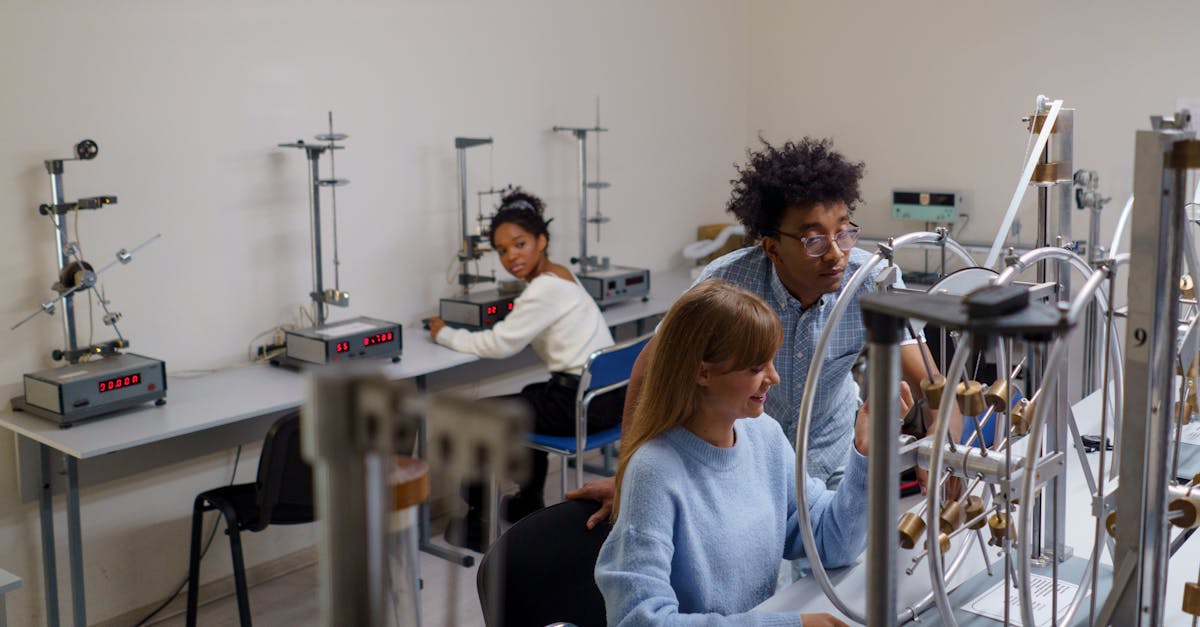
The department redesigned the unit using the three pillars of Curricular Transduction. They constructed a physical hydroponics lab using low-cost tubing and reservoirs, allowing students to mix real nutrient solutions. They integrated digital pH and electrical conductivity sensors that logged data directly to a shared class database. This was the Multimodal Physical Translation phase: students were not just dragging sliders on a screen: they were using real tools to measure physical solutions that they had prepared with their own hands.
To implement Metacognitive Verification, students were required to predict changes in the nutrient concentration based on evaporation and plant absorption before reading the sensor outputs. If the real-world sensor data diverged from their predictions, they had to isolate the biological variables responsible for the difference. The results were immediate and measurable. Within one semester, conceptual retention scores on physical water quality assessments rose by 38.5% compared to the previous digital-only cohort. More importantly, students developed the practical diagnostic skills required to maintain live ecological systems, illustrating the transformative power of merging physical science with digital instrumentation.
Common Mistake: The Interface Bias Warning
A frequent error in modern schools is selecting educational software based on the complexity of its interface rather than its cognitive alignment. If a student spent more than ten minutes of a class period learning how to navigate the menus of an app, the tool has failed. High-output instruction requires tools that are visually simple and logically transparent. If the interface does not disappear into the background within five minutes of use, replace it with a simpler analog model or a more streamlined digital equivalent.
Your 48-Hour Technology and Science for Teaching Action Plan
Transitioning your classroom toward a science-backed digital model does not require a complete curriculum rewrite. You can start building a more resilient system today by taking these sequential micro-actions over the next forty-eight hours.
Step 1: Conduct a Technical Friction Audit (Today)
Review your next planned digital lesson. Count the exact number of clicks, logins, and platform transitions required for a student to reach the core learning task. If the number exceeds three, consolidate your resources. Move all links, reference sheets, and submission forms onto a single digital dashboard. This simple action recovers valuable learning time and immediate focus.
Step 2: Build a Metacognitive Checkpoint (Tomorrow morning)
Select the primary digital tool or simulation you plan to use this week. Create a physical prediction sheet that students must complete before opening their devices. The sheet should ask: What variable am I changing? What is my scientific hypothesis? What data will prove my hypothesis correct? This quick intervention stops mindless clicking and forces logical engagement.
Step 3: Establish an Analog Anchor (Tomorrow afternoon)
Identify one physical object or simple demonstration that matches your digital lesson. If students are using a digital model of cell division, provide them with physical clay to build the phases first. This tactile baseline ensures that when they view the abstract digital representation, their brains have a solid physical schema to anchor the new information.
The Systemic Classroom Integration Scorecard
Assess your current classroom environment by rating each of the following statements on a scale of 1 to 5:
- Operational Simplicity: My students can access their daily digital tasks in under ninety seconds without teacher assistance.
- Sensory Balance: Every digital activity in my class is directly linked to a physical object, sensory demonstration, or real-world dataset.
- Verifiable Logic: My assessments measure whether a student can explain the science of a concept without relying on a digital interface.
- Feedback Latency: My students receive targeted, diagnostic corrections during the learning task rather than days after its completion.
If your total score is below 12, prioritize Step 1 of the action plan. If your score is between 13 and 16, focus on expanding your use of Step 3 to ensure your digital models are anchored in physical reality.
Frequently Asked Questions
How do I manage a transduction model if my school has limited hardware?
The Curricular Transduction Protocol is a method of instructional design, not a hardware quota. You do not need individual devices for every student to implement this framework. In fact, some of the most effective science classrooms use a single station where the teacher projects a high-resolution simulation, while students work in collaborative groups to build physical representations or complete physical calculations. The key is the sequence: ensure that students are using their physical senses to explore a concept before they transition to digital tools for data logging or verification.
Does this approach increase the teacher’s grading and preparation workload?
While establishing the initial physical-to-digital workflow requires more preparation up front, it dramatically decreases your long-term grading and remediation workload. By automating low-level retrieval and initial data collection through well-designed digital systems, you free yourself from repetitive clerical grading. This reclaimed time can be reallocated to high-value coaching and real-time interventions during class. Over a typical semester, educators using this system report a significant reduction in administrative fatigue and a marked increase in instructional efficiency.
How does this framework support neurodivergent learners?
The reduction of extraneous cognitive load is particularly beneficial for students with executive functioning challenges, sensory sensitivities, or processing differences. Standardizing the digital interface removes the anxiety of navigating unpredictable platforms, while the integration of hands-on physical anchors provides a concrete pathway for understanding abstract concepts. This multi-modal approach ensures that every student, regardless of their processing style, has multiple access points to the scientific logic of the lesson.
Conclusion: Reclaiming Your Agency as an Instructional Architect
The choice to merge technology and learning science is a commitment to professional excellence and student sovereignty. By moving away from superficial screen time and embracing a structured transduction model, you ensure that your classroom remains a rigorous center of intellectual growth. The principles we have explored, from signal offloading to metacognitive verification, are designed to protect the learner’s cognitive resources and build durable analytical stamina. Remember that your value as an educator is not in your ability to manage software, but in your ability to engineer the cognitive environment where facts are transformed into persistent human agency.
- Consolidate your digital tools this week to recover lost instruction time and focus.
- Require students to write down their predictions before they interact with any digital simulation.
- Anchor every abstract digital model with a physical object or concrete demonstration.
To master this entire system and gain access to the complete library of lesson plans, templates, and scientific integration rubrics, secure your copy of the definitive resource on the subject. Elevate your practice by applying the rigorous standards of modern learning science to your digital classroom today.