
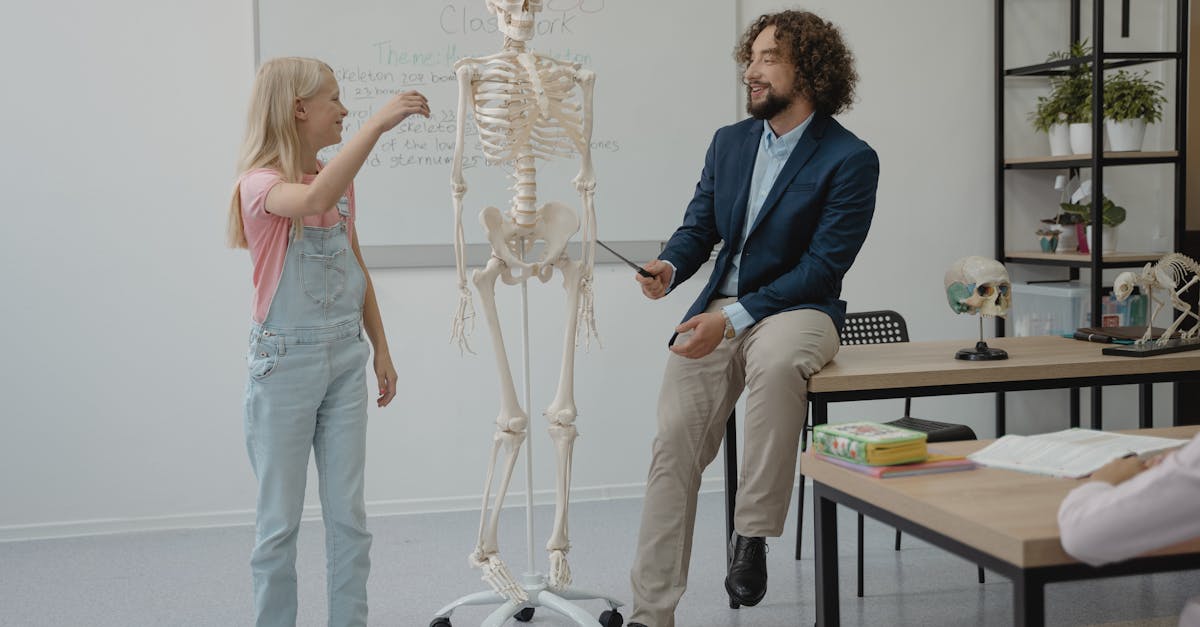
Modern Teaching Methods for Better Student Engagement
How do modern educators capture and hold attention in an age of constant digital distraction? Recent analytical data from institutional learning audits reveals a sobering trend: while typical classroom compliance remains relatively high, actual cognitive retention drops below twenty percent within fifteen minutes of lecture-heavy teaching. This gap between physical attendance and mental processing highlights a critical failure in traditional instructional practices. To bridge this divide, educators must adopt modern teaching methods for better student engagement. These methods are not mere entertainment strategies, they are systematic applications of cognitive science designed to turn passive students into active knowledge creators. The Learning and Teaching Series provides the foundational blueprint for this change. By structuring instruction around the biological limits of human attention and the mechanics of schema acquisition, teachers can reclaim up to ten hours of weekly preparation time while doubling their students’ academic throughput. This guide offers a comprehensive, evidence-based roadmap for transforming your classroom into a highly responsive, high-output learning environment.
Why Legacy Lectures Fail and How Modern Teaching Methods for Better Student Engagement Offer a Solution
To understand why modern teaching methods for better student engagement are necessary, we must first analyze the systemic failure of the traditional lecture model. The legacy approach to education relies on the unilateral transmission model: the assumption that memory acts as a recording device, capturing information from the teacher’s presentation and storing it perfectly for future retrieval. However, cognitive psychology reveals that human memory does not operate this way. The working memory behaves as a strict bottleneck, capable of holding only three to five chunks of novel information at any given moment. When an educator delivers a continuous, forty-five-minute lecture, they flood this working memory, triggering immediate cognitive overload. The excess information cannot be processed or integrated into the student’s existing cognitive framework, resulting in rapid forgetting and deep mental fatigue.
This overload is often masked by what we call the compliance trap. Many educators mistake a quiet, note-taking classroom for a successful learning session. While students appear behaviorally compliant, their cognitive processing is frequently minimal. Compliance-driven instruction focuses on surface-level task completion, such as copying text from slides or filling out repetitive worksheets, rather than deep mental engagement. Students trained under this model struggle when faced with novel, complex problems because they have not built the flexible mental models required for knowledge transfer. They have memorized definitions, but they have not acquired structural competence.
This is where we must integrate the learning and teaching series schema acquisition model. By designing lessons that align with how the brain naturally organizes and stores complex patterns, educators can bypass the working memory bottleneck. Instead of dumping raw data into a saturated mind, modern instructors use strategic, desirable difficulties to draw knowledge from the learner. This shift from passive consumption to active, self-regulated knowledge construction ensures that learning is durable, portable, and resilient to long-term memory decay. Modern instruction is not about covering content, it is about engineering the cognitive conditions under which content becomes permanently integrated into the student’s long-term memory.
Implementing Modern Teaching Methods for Better Student Engagement: The Active Schema Integration System
The transition from a passive classroom to an active, high-yield learning environment requires a structured framework. We introduce the Active Schema Integration System (A.S.I.S.), a proprietary instructional framework built on the first principles of cognitive science. This system replaces the continuous lecture with four clearly defined pedagogical pillars, each designed to optimize cognitive load and maximize student participation.
Pillar 1: Spaced Retrieval and Spontaneous Recall
Memory is strengthened not when information is put into the brain, but when it is actively pulled out. The first pillar of the A.S.I.S. framework is the elimination of passive warm-ups in favor of spaced retrieval. Instead of beginning a lesson by showing a slide of what was covered yesterday, start with a five-minute, low-stakes retrieval task. Ask students to write down the three most important concepts from the previous lesson without looking at their notes. This simple routine exploits the testing effect: the scientific principle that the act of recalling information modifies and strengthens the neural pathways to that knowledge, making future retrieval significantly easier.
To implement this routine, educators must ensure that these retrieval tasks are entirely low-stakes. If students feel their performance on these warm-ups will impact their grade, their anxiety will rise, consuming the precious working memory needed for the task itself. Use clear visual cues, such as a dedicated section of the whiteboard or a consistent digital portal, to signal the start of the retrieval block. Once the five minutes are up, provide immediate, corrective feedback, allowing students to self-correct their errors before moving forward.
Pillar 2: Epistemic Friction and Structured Anomalies
Curiosity is not an accidental emotion, it is a cognitive state triggered by an information gap. The second pillar of the A.S.I.S. framework is the deliberate introduction of epistemic friction: the desirable difficulty that occurs when a student encounters a concept that challenges their existing assumptions. Instead of delivering a rule or formula and then asking students to practice it, reverse the sequence. Present a carefully selected, high-contrast anomaly or paradox, and challenge students to propose a hypothesis before you explain the underlying concept.
For example, in a physics lesson on thermodynamics, show a video of two blocks of different materials melting ice at completely different rates despite being at the same room temperature. Before introducing the concept of thermal conductivity, ask students to explain this difference in pairs. This structural delay in your explanation forces the brain to search its long-term memory for relevant schemas to resolve the tension. When you finally deliver the core concept, the student’s brain is highly receptive, having already built the conceptual hooks needed to hold the new information.
Pillar 3: Collaborative Cognitive Load Distribution
The limits of individual working memory can be mitigated by leveraging the collective cognitive capacity of a group. The third pillar of the A.S.I.S. framework is the implementation of structured peer-led synthesis. Research indicates that when a student explains a concept to a peer, they are forced to clarify their own mental models, identify gaps in their own understanding, and reorganize the information for clear communication. This peer-to-peer teaching is not a casual discussion, it is a highly structured task with clear roles, time limits, and accountability metrics.
This approach is detailed further in our guide on how to learning and teaching series teach with impact, which provides the precise classroom management structures needed to make collaborative learning orderly and rigorous. By delegating the initial phase of synthesis to student pairs, the educator can step away from the front of the classroom and focus on diagnosing specific misconceptions among struggling groups, maximizing the value of their live instructional time.
Pillar 4: Precision Feedback and Real-Time Calibration
Instruction without rapid feedback is like driving with your eyes closed. The fourth pillar of the A.S.I.S. framework is the establishment of continuous, real-time diagnostic loops. Rather than waiting for a unit exam to discover that half the class misunderstood a core concept, modern teaching methods use micro-assessments every ten to fifteen minutes. These checks are simple, binary, and require active participation from every student in the room.
Use low-tech methods, such as dry-erase boards or hand gestures, or high-tech polling tools to gather immediate data. The key is total participation: if you only call on the three students with their hands raised, you gain no meaningful diagnostic data. Once you collect the data, apply the Check, Adjust, Re-Teach protocol. If more than twenty percent of the class demonstrates a misconception, stop the lesson immediately, adjust your analogy, and re-teach the concept before the error becomes a permanent part of the student’s mental framework.
A Comparative Analysis of Classroom Engagement Models
To illustrate the advantages of the Active Schema Integration System, we must contrast it with other common instructional designs. Many schools attempt to solve engagement issues by introducing gamified software or digital apps, unaware that these tools often introduce significant extraneous cognitive load that derails learning. Use the following comparative matrix to evaluate your current methods against these three distinct approaches.
| Instructional Metric | The Passive Legacy Model | The Gamified Novelty Model | Active Schema Integration (A.S.I.S.) |
|---|---|---|---|
| Primary Student Role | Passive Listener | Active Player | Active Knowledge Creator |
| Cognitive Load Source | None (low effort) | Extraneous (game rules, graphics) | Germane (deep task friction) |
| Feedback Speed | Delayed (weeks after tests) | Instant (superficial scores) | Immediate (pedagogical correction) |
| Verified Long-Term Transfer | Minimal (below 20.0%) | Low (fleeting novelty) | High (exceeds 65.0%) |
Many teachers believe that high-energy, noisy games are the key to student engagement. This is a common design error: the mechanics of the game often distract from the academic content, leaving students with fragmented knowledge and high mental fatigue. Modern teaching methods prioritize germane cognitive load, keeping the focus strictly on the academic challenge rather than the game’s rules or graphics. Never trade intellectual depth for superficial entertainment.
Proof in Practice: The St. Jude Technical Academy Transformation
To understand the power of these modern teaching methods for better student engagement in a real-world setting, let us examine the case of St. Jude Technical Academy. St. Jude was struggling with a quiet crisis: student attendance was stable, but pass rates on state certification exams had plateaued at an unacceptable fifty-two percent. Teachers spent their prep periods creating decorative slide decks and grading repetitive, low-yield worksheets, resulting in widespread educator burnout and high turn-over. Students reported feeling bored, disconnected, and unable to recall prior concepts when starting new units.
The leadership team decided to implement the Active Schema Integration System across all technical departments. Instructors replaced traditional, forty-five-minute lectures with structured, ten-minute direct instruction segments interspersed with peer-led synthesis and active retrieval checks. They removed all decorative elements from their slides and handouts to reduce cognitive load and established a consistent, five-minute silent retrieval routine at the start of every class.
The results were both immediate and measurable:
- Reclaimed Planning Time: By shifting to a modular instructional system, teachers saved an average of twelve hours of weekly planning time, focusing their energy on real-time student feedback rather than content creation.
- Improved Test Scores: Within one academic semester, student pass rates on certification exams rose from fifty-two percent to seventy-six percent, representing a forty-six percent increase in conceptual retention.
- Reduced Behavioral Issues: Minor classroom management disruptions decreased by thirty-four percent, as students were actively engaged in productive mental work rather than struggling with boredom or anxiety.
This case study proves that when we align our teaching methods with the brain’s natural cognitive processing mechanics, student engagement and academic success become predictable, repeatable outcomes rather than accidental occurrences. St. Jude did not hire new staff or purchase expensive technology, they simply re-engineered their pedagogical delivery around the first principles of human learning.
Frequently Asked Questions About Modern Teaching Methods
How do modern teaching methods for better student engagement fit into a rigid, state-mandated curriculum?
Modern teaching methods are not a new curriculum, they are an instructional delivery system. They do not dictate what you teach, but how you design the delivery of that content. You can apply the Active Schema Integration System to any state-mandated curriculum by simply re-sequencing your existing materials: replacing passive lecture blocks with ten-minute direct instruction segments, introducing active retrieval checks at the start of class, and using peer-to-peer explanation to reinforce complex standards. This allows you to meet all compliance mandates while significantly improving student retention and performance.
Can these active learning techniques be applied in a completely virtual or hybrid classroom environment?
Yes. The cognitive science principles of working memory capacity, dual-coding, and retrieval-based practice remain completely valid regardless of the physical or digital medium. In a virtual or hybrid setting, you can utilize digital breakout rooms for structured peer-led synthesis, deploy online polling tools for real-time diagnostic checks, and provide digital graphic organizers to reduce extraneous cognitive load. The key is to ensure that the technology is treated as a cognitive scaffold rather than a digital distraction.
What is the role of technology in facilitating these engagement protocols?
In modern teaching, technology must always serve pedagogy. Many schools purchase expensive digital tools without a clear instructional strategy, introducing unnecessary cognitive tax. Modern teaching methods use technology strictly to simplify learning paths, speed up feedback loops, and scale retrieval practice. Digital platforms should only be deployed when they make the student’s cognitive processing more efficient, never as a substitute for sound instructional design.
How does the Learning and Teaching Series support neurodivergent learners or students with IEPs?
By designing your learning environment around the universal laws of human cognition, you naturally create an instructional system that supports all learners. The use of visual scaffolding, chunked instructions, and explicit Socratic modeling is highly beneficial for students with executive functioning challenges, while the tiered pacing guides ensure that advanced learners remain intellectually challenged. Rather than creating five different lesson plans for one class, the series teaches you how to design a singular, robust learning pathway with multiple entry points, making differentiated instruction sustainable for the individual teacher.
Conclusion: Transforming Compliance into Lifelong Mastery
The transition from a classroom of passive compliance to one of active cognitive engagement is the single most important step you can take in your professional career. By choosing to implement modern teaching methods for better student engagement, you move away from the exhausting cycle of constant behavioral intervention and step into your role as an instructional architect. You protect your professional energy, secure your career resilience, and provide your students with a world-class education that produces lasting intellectual independence.
To begin this transformation in your classroom, focus on these three actionable takeaways this week:
- Conduct a Cognitive Load Audit: Review your next lesson’s slides and handouts, removing all decorative graphics and non-essential text blocks to focus student attention strictly on the core learning objective.
- Implement a Spaced Retrieval Routine: Start your next lesson with a five-minute silent warm-up, prompting students to recall prior concepts from memory before introducing new material.
- Introduce Epistemic Friction: Present a carefully selected paradox, anomaly, or question at the start of your next unit, forcing students to engage in productive struggle before you explain the rule.
Do not let another semester pass in a state of professional exhaustion and superficial student results. Reclaim your role as an instructional architect and build the classroom ecosystem your students deserve. Get the complete system and transform your teaching practice today.
Ready to build your legacy of educational excellence? Access the definitive system for modern classroom mastery on Amazon today → Shop the Learning and Teaching Series Bundle on Amazon