
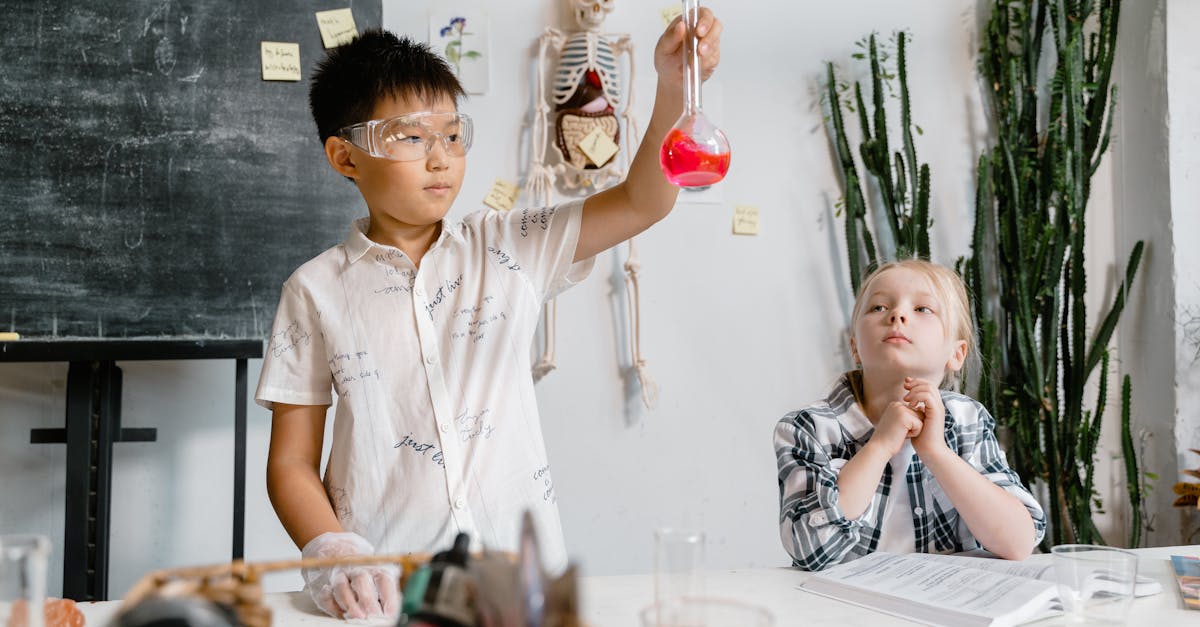
Technology and Science for Teaching: Building Student-Led Research Projects
What happens when students stop being passive recipients of scientific knowledge and start becoming active researchers? According to a 2023 study from the National Science Teaching Association, student-led research projects increase long-term content retention by 47% compared to traditional lecture-based instruction. Yet fewer than 18% of middle and high school science teachers regularly incorporate authentic research experiences into their curriculum.
The gap between knowing that student-led research works and actually implementing it in your classroom is where most educators get stuck. Time constraints, limited resources, assessment concerns, and the sheer logistics of managing 30 students conducting independent investigations can feel overwhelming. But here is the reality: technology and science for teaching have evolved to the point where facilitating genuine research experiences is more accessible than ever before.
This article provides a complete framework for transforming your science classroom into a research hub. You will learn how to scaffold student-led investigations using digital tools, manage multiple research timelines without losing your sanity, and assess authentic scientific work in ways that satisfy both your students and your administration. By the end, you will have a concrete action plan to launch your first student-led research unit within the next two weeks.
The Hidden Cost of Teacher-Directed Science Instruction
Traditional science teaching follows a predictable pattern: introduce concept, demonstrate principle, assign practice problems, test for recall. This approach produces students who can define photosynthesis but cannot design an experiment to test how light intensity affects plant growth. The cost of this approach extends far beyond test scores.
Research from Stanford’s Graduate School of Education reveals that students in teacher-directed science classrooms develop what researchers call “procedural blindness.” They can follow lab protocols step by step but struggle to understand why each step matters or how to modify procedures when unexpected results occur. When these students reach college-level science courses, they often experience significant difficulty transitioning to open-ended research expectations.
The economic implications are equally concerning. The Bureau of Labor Statistics projects a 10% growth in STEM occupations through 2032, yet employers consistently report that new graduates lack critical thinking and independent problem-solving skills. A 2024 survey of biotech hiring managers found that 73% rated “ability to design and troubleshoot experiments” as more important than specific technical knowledge, yet only 31% of recent graduates demonstrated this competency during interviews.
Beyond career preparation, there is a deeper issue at stake. Science is fundamentally about asking questions and seeking answers through systematic investigation. When we reduce science education to memorizing facts and following predetermined procedures, we strip away the very essence of what makes science meaningful. Students leave our classrooms knowing about science but never having experienced what it feels like to be a scientist.
But there is a better way. Technology and science for teaching can work together to create authentic research experiences that fit within existing curriculum constraints and prepare students for both academic and professional success.
The Student Research Catalyst Framework for Technology and Science Teaching
The Student Research Catalyst Framework consists of five interconnected phases that guide students from initial curiosity to publishable findings. Unlike traditional lab activities where outcomes are predetermined, this framework embraces uncertainty and teaches students to navigate the messy reality of authentic scientific investigation.
Phase 1: Question Cultivation
Principle: Great research begins with genuine curiosity, not assigned topics. Students must develop ownership of their research questions to sustain motivation through inevitable challenges.
Action: Implement a “Wonder Wall” using digital collaboration tools like Padlet or Jamboard. Over one week, students post observations, questions, and puzzles they encounter in daily life. The teacher’s role shifts from assigning topics to helping students refine raw curiosity into testable hypotheses.
Example: A ninth-grade biology class used this approach, and one student noticed that her houseplants grew differently near different windows. Her initial question, “Why do my plants look weird?” evolved through guided refinement into “How does the spectrum of light filtered through different window glass types affect chlorophyll production in Pothos plants?” This question connected to curriculum standards on photosynthesis while remaining personally meaningful.
Technology Integration: Use Google Scholar alerts to help students discover if their questions connect to existing research. This teaches literature review skills while validating that their curiosity aligns with real scientific inquiry.
Phase 2: Methodology Design
Principle: Students must understand that experimental design involves trade-offs between ideal conditions and practical constraints. This mirrors authentic scientific practice.
Action: Introduce the “Constraint Canvas,” a structured template where students map their ideal experiment against available resources, time limitations, and safety considerations. Students work in peer review pairs to identify potential confounding variables and suggest controls.
Example: A chemistry student wanted to test how different pH levels affect enzyme activity. Her ideal experiment required a spectrophotometer the school did not own. Through the Constraint Canvas process, she discovered that smartphone colorimetry apps could provide sufficiently accurate measurements for her research question. This problem-solving experience proved more valuable than the content knowledge itself.
Common Mistake to Avoid: Teachers often intervene too quickly when students propose flawed methodologies. Resist this urge. Allow students to discover problems through peer review or small-scale pilot tests. The learning that comes from recognizing and correcting your own errors far exceeds the learning from following teacher-corrected procedures.
Phase 3: Data Collection and Documentation
Principle: Authentic research requires meticulous documentation that allows others to replicate findings. Digital tools make this process more manageable while teaching professional scientific practices.
Action: Require students to maintain digital lab notebooks using platforms like LabArchives, Notion, or even structured Google Docs templates. Notebooks must include timestamped entries, photographs of setups, raw data, and reflection notes on unexpected observations.
Example: An environmental science class investigating local water quality used shared spreadsheets with automatic timestamp functions. When one group’s data showed an unexpected spike in nitrate levels, their detailed documentation allowed them to trace the anomaly to a specific collection site near a recently fertilized lawn. This discovery became the most interesting finding in their final report.
Pro Tip: Teach students to document “failures” with the same rigor as successes. In professional science, negative results and unexpected outcomes often lead to the most significant discoveries. Create a classroom culture where documenting what did not work is valued equally with documenting what did.
Phase 4: Analysis and Interpretation
Principle: Data without interpretation is just numbers. Students must learn to identify patterns, acknowledge limitations, and distinguish between correlation and causation.
Action: Implement structured analysis protocols using tools like Google Sheets with built-in statistical functions or free platforms like CODAP for more advanced visualization. Require students to generate at least three different visual representations of their data before drawing conclusions.
Example: A physics student investigating factors affecting paper airplane flight distance initially concluded that wing length was the primary variable. When required to create multiple visualizations, she noticed that her scatter plot revealed a clustering pattern suggesting that paper weight, not wing length, was the dominant factor. The multiple visualization requirement prevented a premature and incorrect conclusion.
Self-Assessment Checklist for Students:
- Have I identified at least two alternative explanations for my results?
- Have I acknowledged specific limitations in my methodology?
- Can I explain why my sample size does or does not support my conclusions?
- Have I distinguished between what my data shows and what I expected it to show?
Phase 5: Communication and Iteration
Principle: Science is a social enterprise. Findings must be communicated clearly and subjected to peer scrutiny. This phase teaches both communication skills and intellectual humility.
Action: Organize classroom research symposiums where students present findings in poster or presentation format. Implement structured peer review using rubrics that focus on methodology and reasoning rather than just results. Encourage students to identify next steps and future research directions.
Example: A middle school class held a virtual research symposium using Zoom breakout rooms, with students from a partner school serving as external reviewers. The experience of explaining their work to unfamiliar audiences revealed gaps in their reasoning that internal peer review had missed. Several students voluntarily revised their conclusions based on questions they could not adequately answer.
Want the complete system for integrating technology into your science teaching? Get comprehensive strategies, ready-to-use templates, and step-by-step implementation guides in Technology and Science for Teaching on Amazon. This resource provides everything you need to transform your classroom into a student-centered research environment.
Proof in Practice: The Riverside Middle School Transformation
Riverside Middle School in suburban Ohio faced a common challenge: declining student interest in science courses and stagnant standardized test scores despite dedicated teachers and adequate resources. In the 2022-2023 school year, the science department implemented the Student Research Catalyst Framework across all seventh and eighth-grade classes.
Before Implementation:
- Average student engagement score (measured by classroom observation protocol): 2.3 out of 5
- Percentage of students expressing interest in STEM careers: 23%
- State science assessment proficiency rate: 61%
- Teacher-reported stress level regarding lab management: High
The Implementation Process:
Teachers began with a single research unit per semester, dedicating approximately three weeks of instructional time. They used existing curriculum standards as the foundation, requiring that student research questions connect to required content areas. Technology integration focused on tools already available through the district: Google Workspace, Canva for presentations, and smartphone apps for data collection.
The first semester was admittedly chaotic. Teachers reported feeling overwhelmed by the variety of student projects and uncertain about assessment. However, they committed to documenting challenges and refining processes for the second semester.
Key adjustments included:
- Creating a shared database of approved research questions organized by curriculum standard
- Developing checkpoint rubrics that assessed process skills at multiple points rather than only final products
- Establishing peer research groups where students with related topics could share resources and troubleshoot together
- Implementing weekly five-minute “research stand-ups” where students briefly reported progress and obstacles
After One Year:
- Average student engagement score: 4.1 out of 5
- Percentage of students expressing interest in STEM careers: 41%
- State science assessment proficiency rate: 74%
- Teacher-reported stress level: Moderate (with notation that stress was “productive” rather than “overwhelming”)
Perhaps most significantly, three student research projects were accepted for presentation at the regional science fair, and one eighth-grader’s investigation of microplastics in local waterways was featured in the community newspaper. These visible successes created momentum that made the second year of implementation significantly smoother.
If You Only Remember One Thing: The Riverside experience demonstrates that student-led research does not require perfect conditions or extensive resources. It requires a willingness to embrace uncertainty, learn from initial struggles, and trust that students will rise to authentic challenges when given appropriate scaffolding.
Managing Multiple Research Timelines Without Losing Control
The most common objection to student-led research is logistical: “How can I possibly manage 30 different projects simultaneously?” This concern is valid, but technology and science for teaching have evolved to make differentiated project management feasible.
The Research Dashboard Approach
Create a shared digital dashboard using Trello, Notion, or a simple Google Sheet where each student’s project is tracked through defined phases. Students update their own status, and the teacher can see at a glance who needs intervention and who is progressing independently.
Dashboard Categories:
- Question Development (needs refinement, approved, in revision)
- Methodology (drafting, peer review, teacher approved)
- Data Collection (not started, in progress, complete)
- Analysis (not started, in progress, complete)
- Communication (drafting, peer review, final)
Color coding allows immediate visual identification of students who are stuck or falling behind. Weekly dashboard reviews take approximately 15 minutes and replace the need for individual check-ins with every student.
Strategic Grouping for Efficiency
Rather than treating each project as completely independent, identify natural clusters based on methodology type, required equipment, or content area. Students investigating topics that require similar data collection methods can share training sessions and troubleshoot together, reducing teacher workload while building collaborative skills.
For example, all students using microscopy can attend a single technique workshop. All students conducting surveys can collaborate on question design principles. This approach maintains individual ownership of research questions while creating efficiency through shared skill development.
The Consultant Model
Shift your role from director to consultant. Establish “office hours” during class time when students can sign up for focused consultation on specific challenges. Outside of these consultations, students are expected to work independently or seek peer support first. This boundary protects teacher time while teaching students to problem-solve before seeking expert help.
Assessment Strategies That Satisfy Everyone
Authentic research does not fit neatly into traditional grading categories, yet teachers must still provide grades that reflect student learning and satisfy administrative requirements. The solution lies in process-based assessment that values scientific thinking over correct answers.
The Research Portfolio Approach
Rather than grading only final products, assess accumulated evidence of scientific thinking throughout the research process. Portfolio components include:
- Question evolution documentation: Evidence of how initial curiosity was refined into testable hypotheses
- Methodology justification: Written explanation of design choices and trade-offs
- Lab notebook excerpts: Selected entries demonstrating documentation quality and reflection
- Peer review participation: Evidence of constructive feedback given and received
- Final communication: Presentation, poster, or written report
- Reflection essay: Analysis of what was learned, what would be done differently, and next steps
This approach allows students whose experiments “failed” to earn high grades by demonstrating excellent scientific reasoning and learning from unexpected results.
Standards Alignment Documentation
Create a simple mapping document showing how student research projects address required curriculum standards. This documentation satisfies administrative concerns while demonstrating that authentic research covers more standards, not fewer, than traditional instruction.
A single student research project on water quality, for example, might address standards related to chemistry (pH, dissolved oxygen), biology (ecosystem health), earth science (water cycle), and scientific practices (experimental design, data analysis, communication). Traditional instruction would address these standards in isolation across multiple units.
Frequently Asked Questions
How much class time should I dedicate to student-led research projects?
Start with a single three-week unit per semester, dedicating approximately 60% of class time during that period to research activities. As you and your students become more comfortable with the process, you can expand to longer or more frequent research units. Many experienced teachers eventually integrate ongoing research as a parallel track alongside traditional instruction, with students dedicating one class period per week to their investigations throughout the semester.
What if students choose research questions that are too ambitious or impossible to complete?
This is actually a valuable learning opportunity. During the Question Cultivation phase, guide students through feasibility analysis by asking: What equipment would you need? How long would data collection take? What expertise would you require? Most students will recognize constraints and adjust their questions accordingly. For students who remain attached to ambitious questions, help them identify a smaller, achievable component that could serve as a pilot study for future investigation. Learning to scope projects appropriately is itself an important scientific skill.
How do I handle safety concerns with diverse student projects?
Establish clear safety boundaries during the Methodology Design phase. Create a simple approval checklist that students must complete before beginning any data collection. The checklist should address chemical safety, biological materials, electrical equipment, and any activities conducted outside the classroom. Require teacher approval for any project involving materials or procedures not covered by standard classroom safety protocols. Most student research questions can be investigated safely with proper planning and supervision.
What technology tools are essential for implementing student-led research?
You can implement effective student-led research with minimal technology: a shared document platform for collaboration and documentation, a spreadsheet application for data organization, and presentation software for communication. More advanced tools like specialized data analysis software, digital lab notebooks, or simulation platforms enhance the experience but are not required. The most important technology is whatever allows students to document their process, organize their data, and share their findings with others.
Conclusion: Your Next Steps Toward Research-Centered Teaching
Transforming your science classroom into a research hub does not require a complete curriculum overhaul or significant new resources. It requires a shift in mindset: from delivering content to facilitating inquiry, from controlling outcomes to embracing uncertainty, from assessing answers to evaluating thinking.
The Student Research Catalyst Framework provides a structured approach to making this shift manageable. By guiding students through Question Cultivation, Methodology Design, Data Collection, Analysis, and Communication, you create authentic scientific experiences that prepare students for both academic success and professional careers in STEM fields.
Three actionable takeaways to implement this week:
- Start a digital Wonder Wall: Create a shared Padlet or Jamboard where students can post questions and observations. Spend five minutes at the end of each class this week inviting students to add their curiosities. This low-stakes activity builds the foundation for future research projects.
- Identify your first research unit: Review your upcoming curriculum and identify one unit where student-led investigation could replace or supplement traditional instruction. Choose a topic with multiple possible research directions and accessible data collection methods.
- Create your research dashboard: Set up a simple tracking system using whatever digital tools your school already provides. Even a basic spreadsheet with student names and project phases will dramatically improve your ability to manage multiple investigations.
Technology and science for teaching have reached a point where authentic research experiences are accessible to every classroom. The question is no longer whether student-led research is valuable, but whether you are ready to trust your students with the messy, uncertain, deeply rewarding process of genuine scientific inquiry.
For comprehensive guidance on integrating technology into your science teaching practice, including ready-to-use templates, assessment rubrics, and detailed implementation strategies, explore Technology and Science for Teaching on Amazon. This resource provides everything you need to transform your classroom and empower your students as authentic scientific researchers.
