
Technology and Science for Teaching: The Engineering Model
Why is it that despite global spending on educational technology exceeding 30 billion dollars annually, student proficiency in complex problem solving has remained statistically stagnant for over a decade? The disconnect is not found in the quality of the software or the speed of the hardware. Instead, the failure lies in the lack of a rigorous pedagogical framework that aligns digital tools with the biological constants of human cognition. To achieve true instructional impact, we must move beyond the superficial adoption of gadgets and embrace a model of Technology and Science for Teaching that functions as an engineering discipline. This approach treats the classroom not as a theater for technical demonstrations, but as a high precision laboratory where every digital intervention is calibrated to maximize the cognitive return on investment.
This article provides a comprehensive roadmap for educators who are ready to transition from being consumers of edtech to becoming architects of intellectual agency. We will analyze the comparative models of digital integration, provide a scenario-based decision tree for choosing the right tools, and introduce a hybrid strategy that combines the best of analog depth with digital scalability. By the end of this deep dive, you will possess the frameworks necessary to re-engineer your classroom for durability, resilience, and peak academic performance. This is the promise of modern instructional engineering: ensuring that every minute of student effort translates into a permanent shift in conceptual understanding.
The Hidden Cost of Silicon-First Automation
The standard model of educational technology often prioritizes the feature set of the tool over the neurological requirements of the learner. This is what we call silicon-first automation: the assumption that if a process is digitized, it is automatically improved. However, the science of learning suggests a different reality. When we introduce technology without considering the cognitive load, we often create a state of high activity but low encoding. Students may be proficient at clicking through a gamified interface, but they are often unable to transfer that knowledge to a blank sheet of paper or a real world problem. This is the hidden cost of the edtech bubble: the erosion of deep, durable mastery in favor of temporary engagement metrics.
To solve this, we must apply the principles of Technology and Science for Teaching to perform a forensic audit of our instructional workflow. We need to identify the points where technology acts as a cognitive prosthetic: helping the brain handle tasks it was never evolved for: and where it acts as a cognitive distraction. Real world data shows that classrooms that prioritize the engineering of the instructional experience over the quantity of the devices consistently outperform their high-tech peers. The solution is to build what we call the human-centric engineering model, where technology is used to provide the silence and clarity needed for profound thought, rather than the noise and fragmentation of constant notification.
Technology and Science for Teaching: A Comparative Decision Framework
Choosing the right approach to instructional technology requires more than a review of app store ratings. It requires a comparative analysis of how different models affect the student’s mental architecture. The following table provides a breakdown of three distinct approaches to technology in the classroom. By understanding these differences, you can move your practice from the fragile status quo to a resilient state of mastery.
| Integration Pillar | Tool-Centric (Automation) | Content-Centric (Digitization) | Engineering-Centric (Mastery) |
|---|---|---|---|
| Primary Focus | Software features and engagement | Digitizing traditional textbooks | Neurological reception and encoding |
| Cognitive Load | High (UI navigation exceeds task) | Moderate (Split attention issues) | Low (Optimized for working memory) |
| Feedback Speed | Instant (But often superficial) | Delayed (24.0 to 48.0 hours) | Real-Time (Forensic and diagnostic) |
| Asset Durability | Fragile (Depends on specific app) | Moderate (PDF based) | High (Logic-first frameworks) |
The engineering centric approach focuses on what we call the cognitive bridge: the mental pathway between the digital interface and the long term memory. When we build this connection, we create what we call our complete guide on the cognitive bridge in instructional design. This ensures that technology acts as an amplifier for human reasoning rather than a replacement for it. Achieving this balance requires mastering the blend of pedagogical strategy and digital infrastructure. By prioritizing the engineering model, you ensure that your instructional assets are liquid, resilient, and effective across any platform.
When to Use What: The Instructional Decision Tree
A master of Technology and Science for Teaching knows that not every problem requires a digital solution. The decision to use technology should be based on the specific cognitive hurdle the student is facing. The following scenario based decision tree helps you identify the optimal intervention for your classroom.
Scenario 1: High Complexity Concept Introduction
If you are introducing a concept with high intrinsic difficulty: such as the laws of thermodynamics or the mechanics of a neural network: the goal is to manage the cognitive load. The Engineering Choice: Use a high-touch, analog-first approach. Use physical sketches, 3D models, or a Socratic seminar to build the baseline schema. Digital tools should only be used as a secondary signal to provide a visualization that is impossible in the physical world. For example, use an AR overlay to show the electromagnetic fields around a physical motor the students have just built. This ensures the technology supports the reality rather than obscuring it.
Scenario 2: Building Procedural Fluency
When the goal is for students to become fast and accurate with a specific procedure: like balancing chemical equations or writing clean code: technology is your primary multiplier. The Engineering Choice: Implement an adaptive learning platform that uses spaced repetition and immediate diagnostic feedback. The technology can provide a level of repetition and variety that a human teacher could never match. The teacher’s role here is to monitor the data dashboard and identify the specific error clusters that indicate a deep misconception rather than a simple procedural slip.
Scenario 3: Interdisciplinary Synthesis and Inquiry
When students must combine knowledge from multiple domains to solve a novel problem, the challenge is one of organization and data management. The Engineering Choice: Use a collaborative digital workspace that acts as a forensic audit trail. Students should use the platform to document their research, track their iterations, and verify their sources. The technology serves as a prosthetic for executive function, allowing the student to focus their limited working memory on the high-level synthesis required by the project. The final output, however, should be defended through a human-centric medium, such as a formal presentation or a technical interview.
Want the complete system for re-engineering your classroom? Get all 50 prompts + templates in the Technology and Science for Teaching book on Amazon → Get the Book on Amazon
The Hybrid Strategy: The T.S.T. Synthesis Engine
To implement Technology and Science for Teaching at scale, we use a hybrid strategy we call the T.S.T. Synthesis Engine. This model is designed to maximize the return on instructional time by strategically partitioning tasks between the human expert and the digital assistant. It is built on three specific pillars: Semantic Mapping, Cognitive Load Partitioning, and Feedback Loop Synchronization. By following these steps, you build a classroom that is both high-output and human-centric.
Pillar 1: Semantic Mapping
Before any digital tool is introduced, the teacher must perform a semantic mapping of the unit. This involves identifying the core logic gates: the specific concepts that, if misunderstood, will cause the entire unit to collapse. For every logic gate, the teacher creates a multi-signal asset. This might be a short video explanation, a clear visual diagram, and a set of diagnostic questions. By mapping these concepts beforehand, you ensure that the technology is targeting the exact points of cognitive friction rather than just covering general content. This is the difference between a lesson that follows a textbook and a lesson that engineers understanding.
Pillar 2: Cognitive Load Partitioning
In this phase, the teacher ruthlessly partitions the instructional task. We use technology to handle the administrative and procedural load: things like attendance, basic knowledge retrieval, and initial grading. This clears the teacher’s cognitive desk, allowing them to focus 100 percent of their mental energy on high-value human interventions: such as identifying a student’s hidden misconception, facilitating a deep debate, or providing emotional support during a difficult challenge. A resilient classroom is one where the technology handles the routine so the human can handle the exceptional. This partitioning ensures that the teacher is used as a mentor rather than a manual data entry clerk.
Pillar 3: Feedback Loop Synchronization
The final pillar is the synchronization of feedback loops. In a traditional classroom, feedback is episodic: a quiz on Friday that is returned on Monday. In a Technology and Science for Teaching environment, feedback is continuous and forensic. We use digital telemetry to identify the exact second a student encounters a cognitive block. We then use this data to trigger a precision intervention. This might be a digital scaffold that appears automatically, or a notification that prompts the teacher to walk over to the student’s desk. By synchronizing these loops, we ensure that learning never stops due to a lack of guidance. The technology acts as a 24/7 diagnostic layer, ensuring that every student has the support they need to maintain momentum.
One of the most frequent errors in instructional design is the belief that more signals equal more learning. Adding music, excessive animations, and multiple text streams to a digital lesson does not increase understanding: it triggers the split-attention effect and the redundancy effect. The brain’s working memory is a narrow bottleneck. To engineer mastery, you must ruthlessly eliminate every digital signal that does not contribute directly to the conceptual objective. Simplicity is the hallmark of high-performance instruction.
Human-Centric Engineering in Practice: The Robotics Lab Case Study
To see the power of the Technology and Science for Teaching, let’s examine the case of a vocational secondary school that transformed its robotics program using the engineering model. Prior to the transformation, the school used a traditional curriculum where students watched a video of an assembly and then tried to replicate it using paper manuals. Student completion rates were low, and technical errors were rampant. The instruction was fragile: if the teacher was busy with one group, the other four groups stopped working.
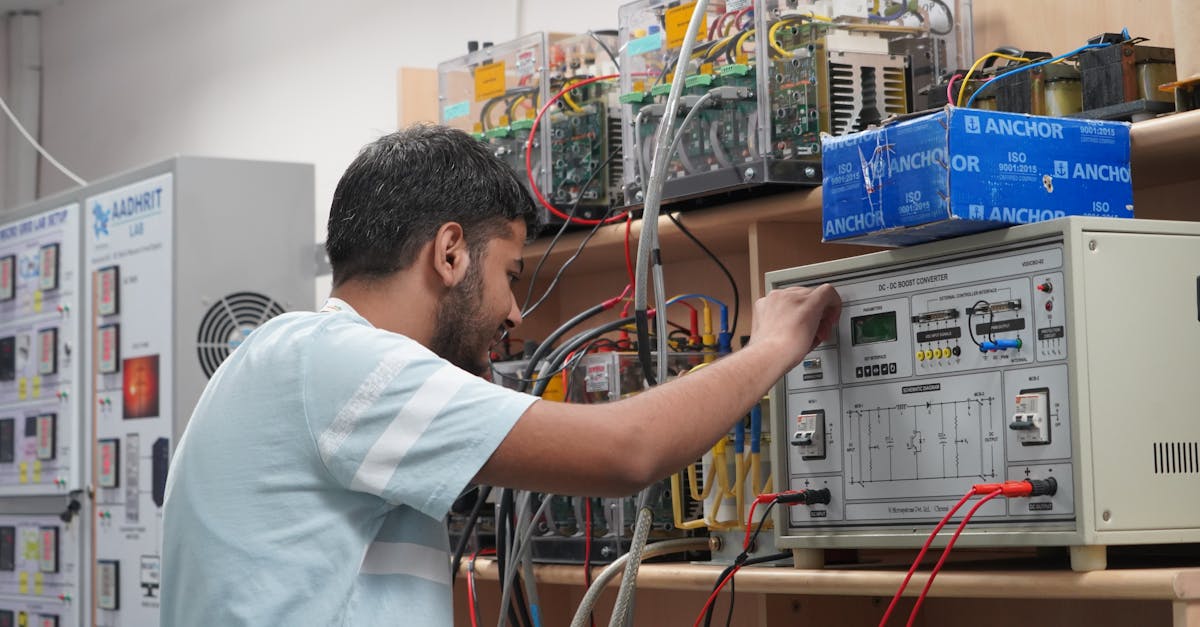
The team re-engineered the program by implementing the T.S.T. Synthesis Engine. First, they performed semantic mapping to identify the critical logic gates of circuit assembly. For each gate, they created an AR overlay that students could access via their tablets. This decoupled the instruction from the teacher’s physical presence. Second, they implemented cognitive load partitioning by using an AI assistant to handle the basic troubleshooting of code syntax. This freed the teacher to spend their time on the complex engineering challenges: such as optimizing gear ratios and sensor calibration. Finally, they synchronized the feedback loops using a digital dashboard that showed exactly which groups were failing and where their logic was broken.
The results were transformative. Completion rates rose from 45 percent to 92 percent within one academic year. More importantly, student technical literacy scores increased by 38 percent, as students were now forced to engage with the underlying logic of the assembly rather than just following a set of rote instructions. This was not the result of a bigger budget: it was the result of using the Technology and Science for Teaching to build a resilient, high-performance learning ecosystem. The students moved from being consumers of a kit to being engineers of a system. This same model can be applied to any discipline, from history to humanities, by focusing on the underlying architecture of data and cognition.
FAQ: Mastering Technology and Science for Teaching
How does instructional engineering differ from traditional EdTech?
Traditional EdTech often focuses on the tool itself: its features, its price, and its ease of use. Instructional engineering focuses on the learner’s brain: how it processes information, where it encounters friction, and how digital tools can be used as a prosthetic for limited cognitive resources. EdTech is about the software; Technology and Science for Teaching is about the synthesis between software and neurobiology. One is a product; the other is a rigorous pedagogical discipline focused on measurable conceptual outcomes.
Can this model work in a classroom with limited device access?
Absolutely. Resilient instruction is a matter of logic, not a matter of budget. You can implement the engineering model with a single computer if you use it to facilitate whole-class diagnostic loops or to model data synthesis. The focus is on the science of the feedback loop and the management of cognitive load. High-output teaching is a matter of pedagogy: prioritizing the brain’s reception of data over the quantity of the screens in the room. A well-engineered lesson with paper and one digital signal is superior to a poorly designed lesson with 30 tablets.
How do I manage the cognitive load when introducing new software?
The key is the principle of technical isolation. Never introduce a new scientific concept and a new digital tool in the same lesson. This creates a cognitive jam where the brain is overwhelmed by two different types of learning. Instead, master the tool first using a familiar, low-stakes topic. Once the students possess technical fluency with the software, then introduce the complex content. This ensures that 100 percent of their working memory is available for the instructional objective rather than being wasted on navigating a new interface.
What is the most important metric for measuring instructional ROI?
The most important metric is the transfer rate: the ability of a student to take a logic framework they learned in a digital environment and apply it to a completely different context or physical problem. If a student can use the diagnostic skills they learned in a virtual chemistry lab to solve a real-world soil acidity problem, you have achieved high ROI. We measure success not by how well they use the tool, but by how well they think without it. This is the ultimate goal of Technology and Science for Teaching: building sovereign, independent expertise.
Conclusion: Your Path to Instructional Sovereignty
The integration of Technology and Science for Teaching is the defining professional challenge of our era. By moving from a model of random tool usage to a model of instructional engineering, you protect your students from cognitive fragmentation and your career from professional exhaustion. You transition from being a facilitator of software to an architect of human intelligence. The digital world is the laboratory; the science of instruction is the blueprint that brings it to life. As you move forward, keep these three strategic takeaways at the center of your practice:
- Audit for Load: Ruthlessly eliminate every digital signal that does not directly contribute to the student’s conceptual understanding. Simplicity is your most powerful engineering tool.
- Design for Retrieval: Use technology to build automated loops for spaced repetition and retrieval practice. Mastery is a function of effortful recall, not just exposure.
- Empower through Agency: Shift the burden of thinking back to the student by using technology as a scaffold for their own metacognitive growth and independent research.
You have the potential to move beyond the limitations of traditional instruction and become a leader in the new era of educational mastery. By applying the Engineering Model, you are building a legacy of excellence that will outlast any specific software update or institutional shift. Your transformation starts with a single systemic change. To access the complete strategic blueprint and start saving hours of planning time every week, secure your copy of the definitive resource today.
Ready to reclaim your professional agency and lead the engineering revolution? Join the thousands of educators who have moved from digital consumption to instructional mastery. Get the complete system for high-performance teaching and save hours of planning every week. Get Technology and Science for Teaching on Amazon and transform your classroom outcomes today.