
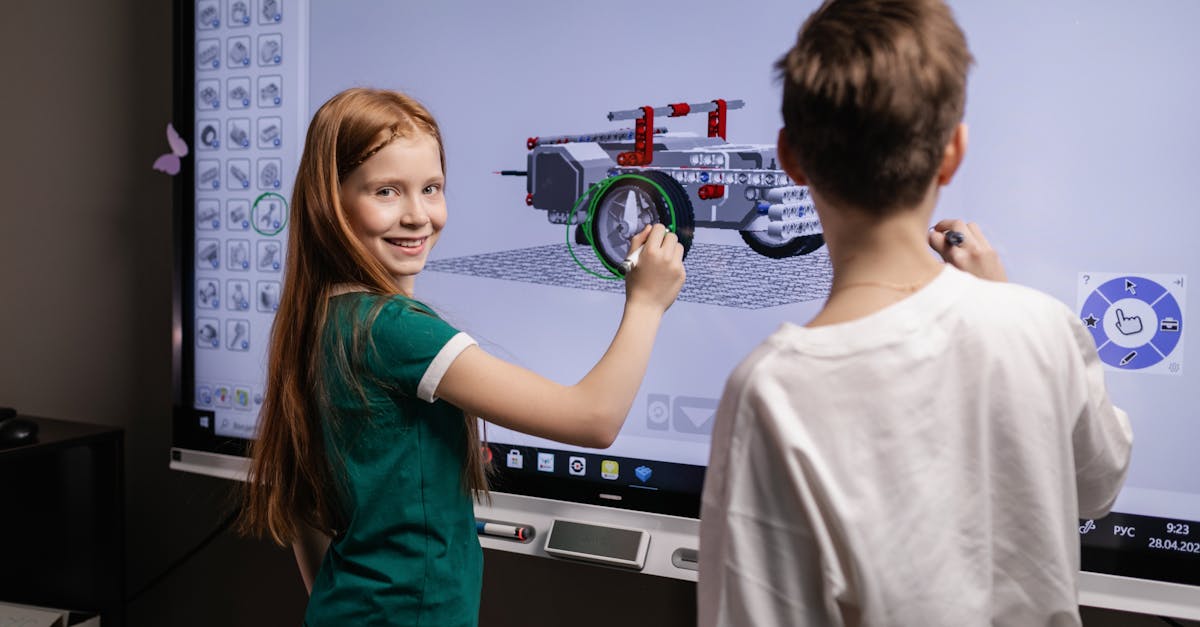
Technology and Science for Teaching: Hands-On STEM Strategies That Work
Did you know that 71% of educators report feeling underprepared to integrate technology and science effectively into their daily teaching practice? According to a 2024 survey by the National Science Teaching Association, the gap between available educational technology and actual classroom implementation continues to widen. Students are growing up in a world dominated by artificial intelligence, biotechnology, and digital innovation, yet many classrooms still rely on outdated methods that fail to spark genuine scientific curiosity.
Technology and science for teaching represents more than just adding tablets to your classroom or conducting the occasional volcano experiment. It requires a fundamental shift in how educators approach STEM education, moving from passive content delivery to active, inquiry-based learning experiences that prepare students for careers that may not even exist yet.
In this comprehensive guide, you will discover a proven framework for integrating technology and science into your teaching practice, regardless of your current comfort level with either subject. You will learn specific strategies that work across grade levels, practical implementation steps you can begin this week, and realistic timelines for seeing measurable results in student engagement and achievement. Whether you teach elementary science, middle school technology, or high school physics, these approaches will transform how your students interact with STEM concepts.
Why Traditional Science and Technology Teaching Falls Short
The traditional approach to teaching science and technology in schools has remained largely unchanged for decades. Teachers present information through lectures, students read from textbooks, and learning is assessed through standardized tests that measure memorization rather than understanding. This model worked adequately when the goal was preparing students for industrial-age careers, but it fails dramatically in preparing them for the innovation economy.
The Memorization Trap
Consider how most students learn the periodic table. They memorize element names, symbols, and atomic numbers for a test, then promptly forget most of this information within weeks. This approach treats science as a collection of facts to be stored rather than a process of discovery to be experienced. Research from cognitive science consistently shows that information learned through rote memorization has poor retention rates compared to knowledge gained through active experimentation and problem-solving.
The same pattern appears in technology education. Students learn to use specific software applications through step-by-step tutorials, but they struggle to transfer these skills to new contexts or troubleshoot when something goes wrong. They become button-pushers rather than problem-solvers.
The Engagement Crisis
Student engagement in STEM subjects drops significantly between elementary and high school. Young children are naturally curious scientists, constantly asking “why” and “how” about the world around them. By high school, many of these same students describe science classes as boring and irrelevant to their lives. This disengagement has real consequences:
- Fewer students pursue STEM careers, creating workforce shortages in critical fields
- Scientific literacy among the general population remains low, affecting civic decision-making
- Students miss opportunities to develop critical thinking skills that transfer across disciplines
- The achievement gap in STEM subjects widens for underrepresented groups
The Resource Misconception
Many educators believe that effective technology and science teaching requires expensive equipment, dedicated lab spaces, and extensive training. While resources certainly help, this belief often becomes an excuse for maintaining the status quo. Some of the most effective STEM learning experiences use everyday materials and free digital tools. The barrier is not primarily financial but pedagogical: teachers need frameworks for designing learning experiences that leverage whatever resources are available.
The Isolation Problem
Science and technology are often taught as isolated subjects, disconnected from each other and from other areas of the curriculum. Students learn biology in one class, use computers in another, and never see how these domains intersect. In the real world, scientific discovery and technological innovation are deeply intertwined. Biologists use computational tools to analyze genetic data. Engineers apply physics principles to design new materials. This artificial separation in schools creates a fragmented understanding that limits students’ ability to tackle complex, interdisciplinary problems.
The Integrated STEM Framework: A Step-by-Step System
Effective technology and science for teaching requires a systematic approach that addresses the shortcomings of traditional methods. The Integrated STEM Framework provides a structure for designing learning experiences that engage students, build deep understanding, and develop transferable skills. This framework consists of five interconnected components that work together to transform STEM education.
Component 1: Phenomenon-Based Learning
Instead of starting with abstract concepts, begin with observable phenomena that spark curiosity. A phenomenon is simply something that happens in the natural or designed world that students can observe and wonder about. Effective phenomena share several characteristics:
- Observable: Students can see, hear, touch, or otherwise directly experience the phenomenon
- Puzzling: The phenomenon raises questions that are not immediately answerable
- Relevant: Students can connect the phenomenon to their own lives or interests
- Rich: Investigating the phenomenon leads to important scientific concepts
For example, rather than teaching a unit on density by defining the concept and providing formulas, start by showing students a video of a massive steel ship floating while a small steel ball sinks. This phenomenon creates cognitive dissonance that motivates investigation. Students want to understand why this happens, and that curiosity drives learning far more effectively than external requirements.
Component 2: Technology as a Tool for Investigation
Technology should serve as a tool for scientific investigation, not as a separate subject to be learned in isolation. When students use digital tools to collect data, visualize patterns, simulate experiments, or communicate findings, they develop both technological fluency and scientific understanding simultaneously.
Practical applications include:
- Data collection: Using smartphone sensors to measure motion, sound, light, or magnetic fields
- Data analysis: Creating spreadsheets and graphs to identify patterns in experimental results
- Simulation: Using virtual labs to explore phenomena that are too dangerous, expensive, or time-consuming for physical experiments
- Collaboration: Sharing findings with classmates or students in other locations through digital platforms
- Documentation: Creating digital portfolios that capture the learning process, not just final products
Component 3: Engineering Design Challenges
Engineering design challenges provide authentic contexts for applying scientific knowledge and technological skills. Unlike traditional lab activities with predetermined outcomes, design challenges are open-ended problems with multiple possible solutions. Students must define criteria for success, brainstorm approaches, build prototypes, test their designs, and iterate based on results.
The engineering design process develops crucial skills:
- Problem definition and constraint identification
- Creative brainstorming and idea generation
- Prototyping and model building
- Testing and data collection
- Analysis and iteration
- Communication and presentation
A well-designed challenge connects to scientific concepts students are learning while allowing for creativity and personal expression. For instance, a challenge to design a container that keeps ice frozen longest connects to concepts of heat transfer, insulation, and material properties while giving students freedom to explore different approaches.
Component 4: Collaborative Learning Structures
Real scientific research and technological development are collaborative endeavors. Scientists work in teams, share findings with the broader community, build on each other’s work, and engage in peer review. Classroom STEM learning should mirror these collaborative structures.
Effective collaborative approaches include:
- Lab teams: Small groups with defined roles that rotate throughout the year
- Peer review: Students evaluate each other’s experimental designs or engineering solutions
- Science talks: Structured discussions where students share observations and build explanations together
- Expert panels: Groups that develop expertise in specific topics and serve as resources for classmates
- Cross-class collaboration: Projects that connect students across classrooms, schools, or even countries
Component 5: Authentic Assessment
Traditional tests measure what students can recall under artificial conditions. Authentic assessment evaluates what students can do with their knowledge in realistic contexts. This shift aligns assessment with the actual goals of STEM education: developing students who can think scientifically, use technology effectively, and solve real problems.
Authentic assessment strategies include:
- Performance tasks: Students demonstrate skills by completing meaningful challenges
- Portfolios: Collections of work that show growth and process over time
- Presentations: Students explain their thinking to authentic audiences
- Self-assessment: Students evaluate their own work against clear criteria
- Competency-based evaluation: Assessment focuses on demonstrated abilities rather than time spent
Want the complete system for integrating technology and science in your classroom? Get all the frameworks, lesson templates, and implementation guides in one comprehensive resource. Get Technology and Science for Teaching on Amazon and start transforming your STEM instruction today.
Implementation: How to Start This Week
Understanding the framework is only the first step. Successful implementation requires practical strategies for translating these principles into daily classroom practice. The following implementation guide provides concrete actions you can take immediately, regardless of your current resources or experience level.
Week 1: Audit and Prepare
Before changing your teaching, take stock of your current situation. This audit will help you identify opportunities and constraints that will shape your implementation approach.
Technology inventory: List all technology resources available to you and your students. Include school devices, student personal devices, software subscriptions, and free online tools. Note any restrictions on technology use.
Curriculum mapping: Review your upcoming units and identify concepts that could be taught through phenomenon-based approaches. Look for topics where students commonly struggle or disengage.
Space assessment: Evaluate your physical classroom space. Where could students work on hands-on projects? What storage is available for materials and ongoing work?
Time analysis: Examine your schedule for flexibility. Where could you extend class periods for deeper investigations? Are there opportunities for cross-curricular collaboration?
Week 2: Start Small with One Phenomenon
Choose one upcoming topic and redesign the introduction using a phenomenon-based approach. Follow these steps:
- Identify the core concept you need to teach
- Find a phenomenon that illustrates this concept in an observable, puzzling way
- Prepare materials or media to present the phenomenon
- Develop questions to guide student observation and discussion
- Plan how students will investigate and develop explanations
Document what happens when you try this approach. Note student reactions, questions that arise, and challenges you encounter. This reflection will inform your next steps.
Week 3: Integrate One Technology Tool
Select one technology tool that supports scientific investigation and integrate it into your teaching. Start with something simple and free:
- Smartphone sensors: Apps like Phyphox turn phones into scientific instruments
- Spreadsheets: Google Sheets or Excel for data organization and graphing
- Simulation tools: PhET Interactive Simulations for virtual experiments
- Documentation: Google Slides or Canva for student presentations
- Collaboration: Padlet or Jamboard for sharing ideas
Focus on one tool until students are comfortable using it independently. Resist the temptation to introduce multiple new technologies simultaneously.
Week 4: Design a Mini-Challenge
Create a short engineering design challenge that connects to your current content. A mini-challenge can be completed in one or two class periods and requires minimal materials. Examples include:
- Design a paper structure that supports the most weight
- Create a device that moves a marble from point A to point B
- Build a container that protects an egg from a short drop
- Construct a simple machine that accomplishes a specific task
Use this experience to practice facilitating open-ended challenges. Notice how students respond to ambiguity and how you can support productive struggle without providing solutions.
Ongoing: Build Collaborative Routines
Gradually introduce collaborative structures that become regular features of your classroom. Start with simple routines:
- Turn and talk: Brief partner discussions during instruction
- Think-pair-share: Individual thinking followed by partner and whole-class discussion
- Gallery walks: Students move around the room viewing and commenting on each other’s work
- Lab roles: Defined responsibilities that rotate within lab groups
As students become comfortable with collaboration, introduce more complex structures like peer review and expert panels.
Common Implementation Challenges and Solutions
Challenge: Students are uncomfortable with open-ended tasks after years of structured assignments.
Solution: Scaffold gradually. Start with constrained choices and slowly increase openness as students build confidence.
Challenge: Technology access is limited or unreliable.
Solution: Design activities that work with whatever technology is available. Use station rotations so not all students need devices simultaneously.
Challenge: Curriculum pacing pressure leaves no time for extended investigations.
Solution: Integrate rather than add. Phenomenon-based approaches often cover content more efficiently because students are more engaged and retain more.
Challenge: Assessment requirements conflict with authentic evaluation approaches.
Solution: Use authentic assessments formatively while preparing students for required standardized measures. The skills developed through authentic learning transfer to traditional tests.
Expected Results and Realistic Timelines
Transforming your approach to technology and science for teaching is a gradual process. Understanding realistic timelines helps maintain motivation and set appropriate expectations for yourself and your students.
First Month: Increased Engagement
The most immediate change you will notice is increased student engagement. When learning begins with puzzling phenomena rather than definitions, students pay attention. When technology serves as a tool for investigation rather than a subject to be studied, students see its relevance. When challenges are open-ended, students invest more effort because they have ownership over their solutions.
Indicators of increased engagement include:
- More questions from students during instruction
- Increased on-task behavior during activities
- Students continuing to discuss topics outside of class
- Fewer behavioral issues during STEM lessons
- Greater willingness to take risks and try new approaches
First Semester: Deeper Understanding
As students experience multiple phenomenon-based units and design challenges, their understanding of scientific concepts deepens. They begin to see connections between topics and transfer knowledge to new contexts. Assessment results may not immediately reflect this deeper understanding if tests focus on recall, but you will notice it in class discussions and student work.
Signs of deeper understanding include:
- Students explaining concepts in their own words rather than repeating definitions
- Spontaneous connections to previous learning
- Application of concepts to novel situations
- More sophisticated questions that go beyond surface-level curiosity
- Improved performance on application and analysis questions
First Year: Skill Development
Over a full year of integrated STEM instruction, students develop significant skills in scientific thinking, technological fluency, and collaborative problem-solving. These skills become increasingly automatic, allowing students to tackle more complex challenges.
Observable skill development includes:
- Independent use of technology tools without step-by-step guidance
- Systematic approaches to investigation and design
- Effective collaboration with diverse partners
- Productive response to failure and iteration
- Clear communication of scientific ideas
Long-Term: Identity and Trajectory
The most significant long-term outcome is a shift in how students see themselves in relation to science and technology. Students who experience engaging, relevant STEM education are more likely to see themselves as capable of scientific thinking and technological problem-solving. This identity shift influences course selection, career aspirations, and lifelong engagement with STEM fields.
Frequently Asked Questions
What is the best way to integrate technology into science teaching?
The best way to integrate technology into science teaching is to use digital tools as instruments for scientific investigation rather than as separate subjects. Start by identifying one technology tool that supports data collection, analysis, or visualization in your current curriculum. Smartphone sensor apps, spreadsheet software, and simulation tools are excellent starting points because they are free, accessible, and directly support scientific practices. Introduce the tool in the context of an authentic investigation where students need it to answer a question they care about. This approach ensures technology serves learning goals rather than becoming a distraction or an end in itself.
How can teachers with limited resources implement hands-on STEM activities?
Teachers with limited resources can implement effective hands-on STEM activities by focusing on design challenges that use everyday materials. Paper, cardboard, tape, string, and recycled containers can support rich engineering challenges that develop the same skills as expensive equipment. Free digital tools like Google Sheets, PhET simulations, and smartphone sensor apps provide technology integration without budget requirements. The key is designing activities around the learning goals rather than the materials. Start by identifying the scientific concepts and skills you want students to develop, then work backward to find accessible materials and tools that support those goals.
How long does it take to see results from changing STEM teaching approaches?
Results from changing STEM teaching approaches appear on different timelines depending on what you measure. Increased student engagement is typically visible within the first few weeks as students respond to more relevant, hands-on learning experiences. Deeper conceptual understanding develops over a semester as students experience multiple phenomenon-based units and make connections between topics. Significant skill development in scientific thinking, technological fluency, and collaborative problem-solving requires a full year of consistent practice. Long-term outcomes like STEM identity and career interest develop over multiple years of quality instruction.
What are the most important skills students need for STEM careers?
The most important skills students need for STEM careers extend beyond content knowledge to include scientific thinking, technological adaptability, and collaborative problem-solving. Scientific thinking involves asking questions, designing investigations, analyzing data, and constructing evidence-based explanations. Technological adaptability means learning new tools quickly and applying them to novel problems rather than mastering specific applications. Collaborative problem-solving requires communicating ideas clearly, building on others’ contributions, and navigating disagreement productively. These transferable skills remain valuable even as specific technologies and scientific knowledge evolve.
Conclusion: Transform Your STEM Teaching Today
Technology and science for teaching represents an opportunity to prepare students for a future where scientific literacy and technological fluency are essential for success. By moving beyond traditional approaches that emphasize memorization and isolated skills, you can create learning experiences that engage students, build deep understanding, and develop transferable capabilities.
The Integrated STEM Framework provides a systematic approach to this transformation. Phenomenon-based learning sparks curiosity and motivation. Technology as a tool for investigation develops fluency in authentic contexts. Engineering design challenges provide opportunities for creative problem-solving. Collaborative structures mirror real scientific and technological work. Authentic assessment evaluates what truly matters.
Here are your three actionable takeaways to begin transforming your STEM teaching:
- Start with one phenomenon: Choose your next unit and redesign the introduction around an observable, puzzling phenomenon that sparks student curiosity and drives investigation.
- Integrate one technology tool: Select a free digital tool like a smartphone sensor app or simulation and use it to support authentic scientific investigation in your classroom this week.
- Design one mini-challenge: Create a short engineering design challenge using everyday materials that connects to your current content and gives students open-ended problem-solving experience.
The journey to transformed STEM teaching is gradual, but every step matters. Each phenomenon-based lesson, each technology-enhanced investigation, and each design challenge moves your students closer to becoming the scientific thinkers and technological problem-solvers our world needs.
Ready to accelerate your transformation? Get the complete collection of frameworks, lesson templates, and implementation guides that will help you integrate technology and science seamlessly into your teaching practice. Get Technology and Science for Teaching on Amazon and give your students the STEM education they deserve.
