
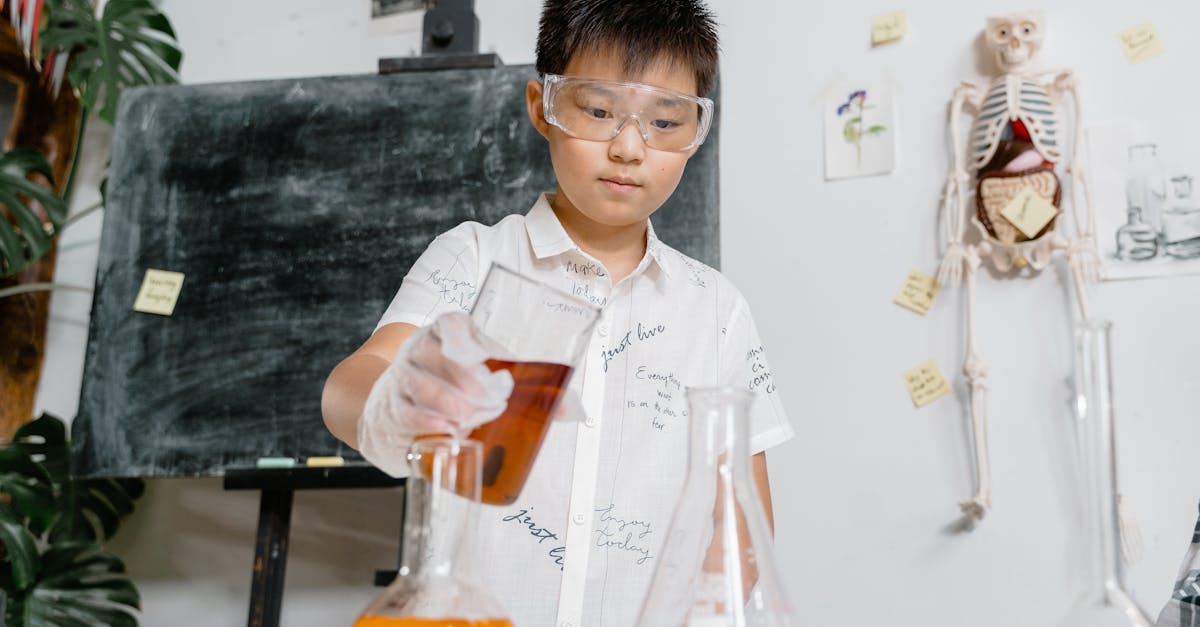
Technology and Science for Teaching: Lab-Free STEM Experiments for Any Classroom
What if you could deliver engaging, hands-on science experiments without a dedicated lab, expensive equipment, or hours of preparation? For the 68% of educators teaching in schools without proper science facilities, this question is not hypothetical. It is the daily reality that shapes how students experience technology and science learning.
The gap between well-funded schools with state-of-the-art labs and under-resourced classrooms continues to widen. Yet research from the National Science Teaching Association reveals something surprising: students who engage in improvised, everyday-material experiments often demonstrate deeper conceptual understanding than those following rigid lab protocols. The constraint becomes the catalyst for creativity.
This article delivers a complete system for transforming any classroom, library corner, or outdoor space into a functional STEM learning environment. You will discover three myths preventing teachers from attempting hands-on science, a tiered approach to experiment design that scales with your resources, and a ready-to-implement toolkit that requires nothing more than household items and curiosity. By the end, you will have at least five experiments you can run tomorrow with materials already in your building.
3 Myths Holding Back Lab-Free Science Teaching
Before diving into solutions, we must dismantle the beliefs that keep educators from attempting hands-on science in non-traditional spaces. These myths persist because they contain partial truths, making them particularly dangerous.
Myth 1: Real Science Requires Real Equipment
The Belief: Without beakers, Bunsen burners, and microscopes, you cannot teach authentic science. Students need professional-grade tools to understand scientific principles.
The Reality: The scientific method does not require specific equipment. It requires observation, hypothesis formation, testing, and analysis. Marie Curie conducted early radiation experiments with improvised equipment. The Wright Brothers built wind tunnels from bicycle parts. What matters is the process, not the polish.
A 2023 study from Stanford’s Graduate School of Education found that students using everyday materials in experiments scored 12% higher on conceptual understanding assessments than control groups using standard lab equipment. The researchers attributed this to increased cognitive engagement: when students must think about how a plastic bottle can substitute for a graduated cylinder, they engage more deeply with measurement concepts.
Myth 2: Safety Concerns Make Classroom Experiments Impossible
The Belief: Without proper ventilation, safety showers, and fire suppression systems, conducting experiments puts students at unacceptable risk.
The Reality: The vast majority of meaningful science experiments involve zero hazardous materials. Physics demonstrations using ramps and balls, biology observations of plant growth, chemistry explorations with baking soda and vinegar: these activities carry less risk than a typical art class with scissors and hot glue guns.
The key is selecting experiments appropriate for your environment. A regular classroom can safely host hundreds of experiments involving mechanics, optics, acoustics, botany, ecology, and non-reactive chemistry. The limitation is imagination, not safety.
Myth 3: Hands-On Science Takes Too Much Preparation Time
The Belief: Setting up experiments, gathering materials, and managing the chaos of active learning consumes more time than traditional instruction delivers in learning outcomes.
The Reality: Front-loaded preparation does require investment, but the return compounds over time. Once you establish a system for lab-free experiments, the same materials and procedures serve multiple lessons across years. More importantly, student engagement during hands-on activities reduces behavioral management time and increases information retention, creating net time savings.
Teachers who implement structured experiment routines report spending 40% less time re-teaching concepts compared to lecture-only approaches. The preparation investment pays dividends in reduced remediation.
Technology and Science for Teaching: The Three-Tier Experiment System
Not all classrooms have the same resources, and not all lessons require the same level of hands-on engagement. This tiered system allows you to match experiment complexity to your available time, materials, and learning objectives.
Tier 1: Zero-Prep Demonstrations (5 Minutes or Less)
These experiments require materials found in any classroom or easily carried in a teacher’s bag. They work as lesson hooks, concept reinforcements, or spontaneous teaching moments.
The Principle: Capture attention and illustrate one specific concept with minimal setup.
The Action: Keep a “science bag” with these items always available: rubber bands, paper clips, balloons, a small mirror, a flashlight, salt, pepper, a plastic comb, and paper towels.
Example: Static Electricity Separation
- Sprinkle salt and pepper mixed together on a desk surface
- Rub a plastic comb through your hair or on wool fabric
- Hold the comb close to the mixture
- Watch the pepper jump to the comb while salt stays put
- Discussion: Why does pepper respond differently? (Lower mass, same charge attraction)
This demonstration takes 90 seconds and illustrates electrostatic principles more memorably than any diagram.
Tier 2: Structured Mini-Labs (15-30 Minutes)
These experiments require advance material gathering but use common household items. They work as standalone lessons or unit culminations.
The Principle: Guide students through the complete scientific method with controlled variables and measurable outcomes.
The Action: Send home a materials request list at the start of each unit. Parents contribute items like empty bottles, cardboard tubes, rubber bands, and food coloring. Store contributions in labeled bins for repeated use.
Example: Density Tower Investigation
- Gather: honey, corn syrup, dish soap, water, vegetable oil, rubbing alcohol, clear containers
- Students predict the order liquids will layer based on observed properties
- Carefully pour each liquid into the container
- Test small objects (grape, cork, bolt, plastic bead) to see where they float
- Students revise predictions and explain observations using density concepts
This lab requires 20 minutes of class time and generates data students can graph, analyze, and discuss for an additional period.
Tier 3: Extended Investigation Projects (Multiple Sessions)
These experiments span days or weeks, allowing students to observe processes that unfold over time. They work as unit anchors or independent research projects.
The Principle: Develop patience, long-term observation skills, and understanding of processes that cannot be rushed.
The Action: Designate a “science corner” in your classroom where ongoing experiments can remain undisturbed. Use window sills for light-dependent experiments and closets for dark-condition controls.
Example: Mold Growth Variables Study
- Students design experiments testing what conditions accelerate or inhibit mold growth on bread
- Variables might include: moisture, light, temperature, air exposure, surface treatments
- Daily observations logged in science journals with sketches and measurements
- Final presentations compare results across different variable manipulations
- Duration: 10-14 days with 5-minute daily observation periods
This project costs nearly nothing but teaches experimental design, variable control, data collection, and scientific communication.
Want the complete system with 75+ ready-to-use experiments, material lists, and student worksheets? The comprehensive guide covers every science domain with experiments specifically designed for resource-limited classrooms. Get Technology and Science for Teaching on Amazon and transform your classroom this week.
Your Lab-Free STEM Starter Toolkit
Theory matters, but implementation requires specifics. This toolkit provides everything you need to begin lab-free science teaching immediately, organized by science domain and resource level.
Physics Without Equipment
Concept: Newton’s Laws of Motion
Materials: Textbooks of varying weights, a smooth floor or table, string, rubber bands
Quick Experiment: Stack books on a sheet of paper. Pull the paper slowly, then quickly. Observe how speed affects whether books stay on the paper (inertia demonstration). Measure the force needed to move different book stacks using rubber band stretch as a force indicator.
Pro Tip: Have students predict outcomes before each trial. The prediction-observation gap creates memorable learning moments.
Concept: Sound Waves and Frequency
Materials: Rubber bands of different thicknesses, empty tissue boxes, rulers
Quick Experiment: Stretch rubber bands across tissue box openings to create simple string instruments. Vary tension and thickness to explore pitch relationships. Use rulers extending off desk edges to demonstrate frequency through vibration speed.
Pro Tip: Connect to mathematics by having students measure rubber band lengths and graph the relationship between length and pitch.
Chemistry in the Classroom
Concept: Acid-Base Reactions
Materials: Baking soda, vinegar, red cabbage, various household liquids
Quick Experiment: Boil red cabbage to create a natural pH indicator. Test household substances (lemon juice, soap, milk, soda) to classify as acids or bases based on color change. Create a classroom pH scale with tested substances.
Pro Tip: Freeze cabbage juice in ice cube trays for instant future use. One cabbage provides indicator for an entire school year.
Concept: Chemical vs. Physical Changes
Materials: Ice, salt, sugar, water, paper, candle (teacher-controlled)
Quick Experiment: Students categorize changes as chemical or physical: ice melting, sugar dissolving, paper tearing, paper burning, salt dissolving then evaporating. The salt recovery demonstrates reversibility as a key distinction.
Biology Beyond the Lab
Concept: Plant Tropisms
Materials: Bean seeds, paper towels, plastic bags, cardboard boxes with holes
Quick Experiment: Germinate beans in wet paper towels inside plastic bags taped to windows. Place growing seedlings in boxes with single light holes to observe phototropism. Rotate some plants daily to demonstrate gravitropism response.
Pro Tip: Start seeds on Friday. By Monday, germination provides immediate engagement and sets up week-long observation.
Concept: Ecosystem Interactions
Materials: Clear 2-liter bottles, soil, small plants, water, tape
Quick Experiment: Create closed terrariums that demonstrate water cycle, photosynthesis, and decomposition in miniature ecosystems. Compare sealed versus open systems over several weeks.
Earth Science Explorations
Concept: Erosion and Weathering
Materials: Aluminum trays, sand, soil, water, straws, ice cubes
Quick Experiment: Build miniature landscapes in trays. Simulate rain with spray bottles, wind with straws, and freeze-thaw cycles with ice placement. Document changes through photography and measurement.
Pro Tip: Connect to current events by researching recent erosion-related news and comparing classroom models to real-world processes.
Concept: Rock Cycle Simulation
Materials: Crayon shavings, aluminum foil, warm water, heavy books
Quick Experiment: Use crayon shavings to model sedimentary rock formation (pressure from books), metamorphic transformation (heat from warm water bath), and igneous processes (melting and cooling). Students can keep their “rocks” as study aids.
Technology Integration Points
Even without computer labs, technology enhances lab-free science:
- Smartphone slow-motion cameras: Capture physics demonstrations for frame-by-frame analysis
- Free simulation websites: PhET Interactive Simulations provide virtual labs for concepts requiring expensive equipment
- Digital microscope attachments: Under $20 devices turn phones into microscopes for biology observations
- Time-lapse apps: Document slow processes like plant growth or crystal formation
Common Mistakes in Lab-Free Science Teaching
Awareness of pitfalls helps you avoid them. These mistakes derail even well-intentioned hands-on science attempts.
Mistake 1: Prioritizing Spectacle Over Learning
Explosive demonstrations grab attention but often obscure the underlying science. Students remember the “cool factor” without understanding the principles. Always pair dramatic demonstrations with structured reflection: What did you observe? What caused it? How could we test that explanation?
Mistake 2: Insufficient Prediction Time
Rushing to the experiment skips the most valuable learning phase. When students predict outcomes before observing them, they engage prior knowledge and create cognitive stakes in the result. Build prediction into every experiment protocol.
Mistake 3: Single-Trial Conclusions
One demonstration does not constitute evidence. Even simple experiments should include repetition and variation. If time limits trials, discuss why scientists repeat experiments and what additional trials might reveal.
Mistake 4: Abandoning Experiments That “Fail”
Unexpected results provide the richest learning opportunities. When experiments do not produce anticipated outcomes, resist the urge to explain away the discrepancy. Instead, guide students to investigate: What variables might we have missed? How does this change our understanding?
Self-Assessment: Is Your Classroom Ready for Lab-Free Science?
Rate yourself on each item (1 = not at all, 5 = completely ready):
- I have identified at least one storage location for ongoing experiments
- I can name five household items useful for science demonstrations
- I have a system for collecting materials from families
- I know which curriculum standards can be addressed through hands-on activities
- I have practiced at least one demonstration before presenting it to students
- I have a plan for managing active learning without traditional lab protocols
Score 25 or higher: You are ready to implement immediately. Score 15-24: Focus on your lowest-rated areas before beginning. Score below 15: Start with Tier 1 demonstrations only until you build confidence and systems.
Frequently Asked Questions About Lab-Free STEM Teaching
How do I assess hands-on learning without traditional lab reports?
Effective assessment of lab-free experiments focuses on process over product. Use observation checklists during activities to document student engagement with scientific practices: forming hypotheses, controlling variables, recording data, and drawing evidence-based conclusions. Science journals where students sketch observations and write reflections provide ongoing assessment data. For summative assessment, have students design their own experiments to test related concepts, demonstrating transfer of scientific thinking skills rather than memorization of specific procedures.
What if my administration requires traditional lab experiences for accreditation?
Most accreditation standards specify learning outcomes, not specific equipment or facilities. Document how your lab-free experiments address required standards by mapping each activity to specific learning objectives. Photograph student work, collect data sheets, and maintain portfolios demonstrating scientific skill development. Many administrators become advocates for creative approaches once they see documented student engagement and learning outcomes that meet or exceed traditional lab results.
How do I manage materials and cleanup without lab facilities?
Establish clear routines that students internalize. Assign rotating “materials managers” responsible for distribution and collection. Use disposable or easily cleaned items when possible. Create “experiment stations” with all needed materials pre-organized in bins or trays. For cleanup, keep a dedicated supply of paper towels, trash bags, and basic cleaning supplies in your classroom. Most lab-free experiments generate minimal mess compared to traditional chemistry or biology labs.
Can lab-free experiments adequately prepare students for high school science?
Students who develop strong scientific thinking skills through any hands-on experience adapt quickly to formal lab environments. The core competencies, including hypothesis formation, variable control, data analysis, and evidence-based reasoning, transfer regardless of the equipment used to develop them. Research indicates that students with extensive informal science experience often outperform peers with only traditional lab exposure because they have developed flexible problem-solving approaches rather than rigid procedural knowledge.
Conclusion: Transform Your Teaching Space Today
The absence of a dedicated science lab is not a barrier to hands-on STEM education. It is an invitation to creativity that often produces deeper learning than traditional approaches. Every classroom, hallway, and outdoor space contains opportunities for scientific exploration.
Your three immediate action steps:
- This week: Assemble your “science bag” with the Tier 1 materials listed above. Practice one demonstration before trying it with students.
- This month: Send home a materials request for your next unit. Identify your classroom’s “science corner” for ongoing experiments.
- This semester: Implement at least one experiment from each tier. Document student engagement and learning outcomes to build your case for expanded hands-on instruction.
The students in under-resourced classrooms deserve the same quality science education as their peers in well-funded schools. With intentional planning and creative material use, you can deliver that education starting tomorrow.
For a comprehensive collection of lab-free experiments organized by grade level, subject area, and available time, along with reproducible student worksheets and assessment rubrics, get Technology and Science for Teaching on Amazon. This resource provides everything you need to transform any space into a functional STEM learning environment.
