
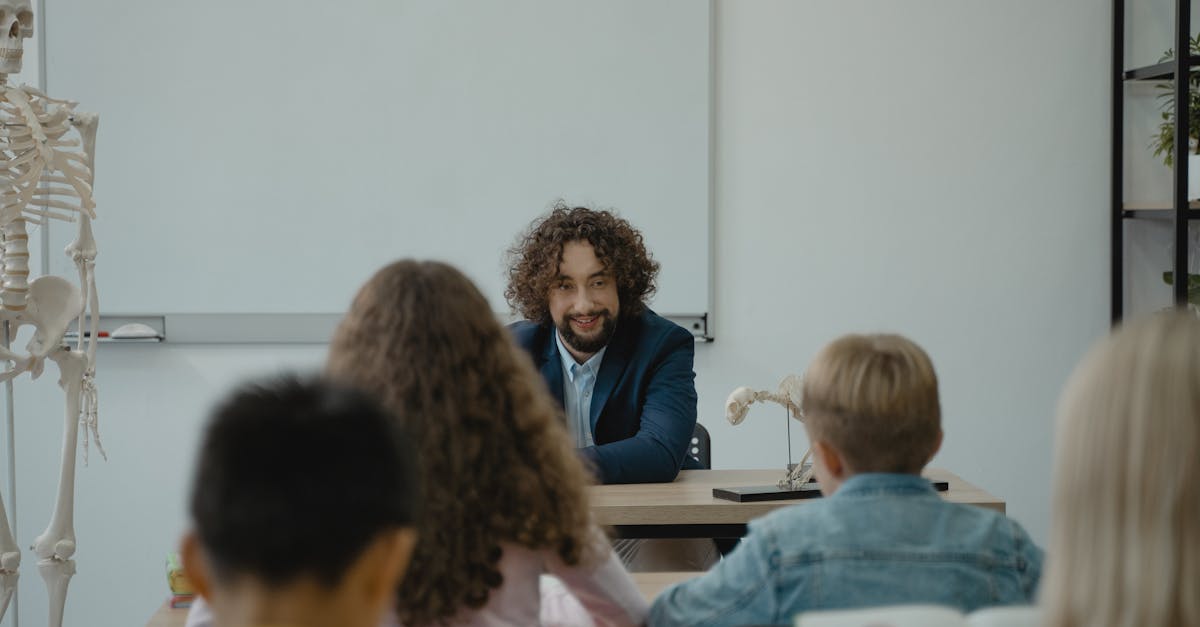
Technology and Science for Teaching: The Flipped Classroom Revolution
What if your students came to class already understanding the basics, ready to dive into hands-on experiments and collaborative problem-solving from the moment they walked through the door? This is not a distant dream. It is the reality that thousands of educators are creating right now through strategic flipped classroom implementation in science and technology education.
Recent data from the Flipped Learning Network reveals that 71% of teachers who implemented flipped learning reported improved student achievement, while 80% noted increased student engagement. Yet despite these compelling numbers, many educators struggle to translate the flipped model into their specific teaching context, particularly in STEM subjects where laboratory work and hands-on experimentation remain essential.
This article delivers a comprehensive framework for transforming your science and technology classroom through strategic content inversion. You will discover how to design pre-class materials that actually prepare students for deeper learning, restructure your in-class time for maximum impact, and leverage technology tools that make the entire process sustainable. By the end, you will have a clear roadmap for implementing flipped learning that respects your time constraints while dramatically improving student outcomes.
The Hidden Cost of Traditional Science Instruction
Consider the typical science classroom: a teacher stands at the front, delivering a 30-minute lecture on cellular respiration while students frantically copy notes. The remaining 15 minutes are devoted to a rushed lab activity that students barely understand. Homework consists of reading the textbook chapter and answering end-of-chapter questions. Sound familiar?
This model carries significant hidden costs that compound over time:
- Cognitive overload during instruction: Students receive new information precisely when they have no context for understanding it, leading to surface-level memorization rather than deep comprehension.
- Wasted expertise during practice: The most challenging cognitive work happens at home, where students have no access to teacher guidance or peer collaboration.
- Compressed application time: Hands-on activities become rushed afterthoughts rather than the centerpiece of learning.
- One-size-fits-all pacing: Every student receives the same lecture at the same speed, regardless of prior knowledge or learning needs.
Research from the Journal of Science Education and Technology found that students in traditional lecture-based science courses retained only 10-20% of content after two weeks. Compare this to active learning environments where retention rates climb to 75% or higher. The difference is not marginal. It is transformational.
The financial cost is equally striking. When teachers spend 60% of class time on direct instruction, they are essentially using their most expensive resource, live expert guidance, for the task that technology can handle most efficiently: content delivery. Meanwhile, the tasks that require human expertise, such as answering questions, facilitating discussions, and guiding hands-on work, get squeezed into whatever time remains.
But there is a better way. The flipped classroom model inverts this equation, placing content consumption outside class time and reserving face-to-face instruction for the activities that genuinely require human presence and expertise.
The FLIP Framework for Technology and Science Teaching
Successful flipped learning in STEM subjects requires more than simply recording lectures and assigning them as homework. It demands a systematic approach that addresses content design, student accountability, in-class restructuring, and continuous improvement. The FLIP Framework provides this structure.
F: Foundation Building Through Strategic Pre-Class Content
The quality of your pre-class materials determines everything that follows. Effective foundation content shares several characteristics:
Principle: Pre-class content should activate prior knowledge, introduce core concepts, and create productive confusion that motivates in-class exploration.
Action: Design video content in 6-10 minute segments, each focused on a single learning objective. Include embedded questions at 2-3 minute intervals to maintain engagement and check comprehension. End each video with a “burning question” that students bring to class.
Example: For a unit on chemical reactions, create a 7-minute video explaining the difference between physical and chemical changes. Embed questions asking students to classify everyday examples. Conclude with footage of an ambiguous transformation, such as dissolving salt in water, and ask students to come to class prepared to argue whether it represents a physical or chemical change.
The key insight here is that pre-class content should not attempt to teach everything. It should provide just enough foundation for students to engage meaningfully with in-class activities. Think of it as the trailer, not the movie.
L: Leverage Points for In-Class Transformation
With foundational content moved outside class, you gain precious minutes for activities that were previously impossible. Identifying the right leverage points maximizes this opportunity.
Principle: In-class time should be devoted to activities that require synchronous interaction, immediate feedback, or physical resources unavailable at home.
Action: Audit your current curriculum and categorize every activity into three buckets: “Must be synchronous,” “Better synchronous,” and “Can be asynchronous.” Ruthlessly move the third category outside class time.
Example: In a physics unit on motion, the following activities must be synchronous: conducting experiments with motion sensors, collaborative problem-solving sessions, and Socratic discussions about counterintuitive results. These activities are better synchronous but could be asynchronous: peer review of lab reports, quiz review sessions. These activities can be asynchronous: watching demonstrations, reading background material, completing practice calculations.
This categorization often reveals surprising opportunities. Many teachers discover that 40-50% of their current in-class activities could be moved outside class time without any loss of quality.
I: Integration Mechanisms for Accountability
The most common failure point in flipped learning is student non-compliance with pre-class work. Without robust integration mechanisms, you arrive to class with half your students unprepared, forcing you to re-teach content and negating the entire model’s benefits.
Principle: Pre-class accountability must be immediate, low-stakes, and directly connected to in-class success.
Action: Implement a three-layer accountability system: (1) embedded video questions that students must answer to proceed, (2) a brief entrance activity that requires pre-class knowledge, and (3) in-class activities designed so that unprepared students cannot meaningfully participate.
Example: Students watch a video on circuit design before class, answering embedded questions tracked through your learning management system. Upon entering class, they complete a 3-question “entry ticket” that takes prepared students 2 minutes but would take unprepared students 15 minutes. The main activity involves building circuits in teams, where each member must explain one component. Students who did not watch the video cannot fulfill their role, creating natural peer accountability.
The goal is not punishment but natural consequences. When pre-class preparation directly enables in-class success, students quickly learn that preparation is non-negotiable.
P: Progressive Refinement Through Data
Flipped learning generates unprecedented data about student understanding. Effective implementation uses this data for continuous improvement.
Principle: Every pre-class interaction should generate actionable data that shapes in-class instruction.
Action: Review embedded question responses before each class session. Identify the three concepts with lowest comprehension rates and design your in-class activities to address these specific gaps. Track patterns across units to identify systemic issues with your pre-class content.
Example: Before a class on genetics, you review responses to your video questions and discover that 73% of students correctly identified dominant and recessive alleles, but only 34% could predict offspring phenotypes from a Punnett square. You restructure your planned activity to spend 20 minutes on guided Punnett square practice before moving to the more complex inheritance patterns you originally planned to cover.
This responsive approach transforms teaching from a performance into a conversation. You are no longer guessing what students need. You know, with data, exactly where to focus your expertise.
Want the complete system for transforming your science and technology classroom? The comprehensive guide to modern STEM instruction includes ready-to-use templates, video scripts, and assessment frameworks that make flipped learning implementation straightforward. Get Technology and Science for Teaching on Amazon and access everything you need to revolutionize your classroom.
Proof in Practice: The Transformation of Room 214
Abstract frameworks only matter if they work in real classrooms. Consider the transformation that occurred in a suburban middle school science classroom over one academic year.
The Before State
Ms. Rodriguez taught 7th-grade life science to 142 students across five periods. Her typical class followed a familiar pattern: 25 minutes of lecture with PowerPoint slides, 15 minutes of textbook reading or worksheet completion, and occasional lab days that required extensive setup and cleanup time.
Her challenges were equally familiar:
- Student engagement dropped noticeably after the first 10 minutes of lecture
- Lab activities felt rushed and often ended before students could draw meaningful conclusions
- Differentiation was nearly impossible given time constraints
- Assessment data showed strong performance on recall questions but weak performance on application and analysis
Her end-of-year state assessment results placed her students at 67% proficiency, slightly below the district average.
The Implementation Process
Ms. Rodriguez began her flipped classroom transition during summer break, focusing on her most challenging unit: cellular biology. She created 12 short videos covering cell structure, organelle function, and cellular processes. Each video included 3-4 embedded questions and concluded with a discussion prompt.
Her in-class time was restructured around three activity types:
Exploration stations: Students rotated through microscope stations, model-building activities, and simulation software, spending 12-15 minutes at each station with teacher guidance available throughout.
Collaborative problem-solving: Teams tackled complex scenarios requiring application of cellular biology concepts, such as diagnosing fictional diseases based on organelle malfunction or designing experiments to test cellular responses.
Socratic seminars: Student-led discussions explored the implications and connections of cellular biology, such as how understanding cells changes our approach to medicine or what ethical questions arise from cellular manipulation.
The Results
After one year of flipped implementation, Ms. Rodriguez documented the following changes:
- State assessment proficiency: Increased from 67% to 84%, representing the largest single-year gain in her building
- Student engagement: Self-reported engagement scores increased from 3.2 to 4.4 on a 5-point scale
- Lab completion rates: Students completed lab activities with meaningful conclusions 94% of the time, compared to 61% previously
- Differentiation capacity: Ms. Rodriguez reported being able to work individually with struggling students during every class period, something previously impossible
Perhaps most significantly, Ms. Rodriguez reported that her own job satisfaction increased dramatically. “I became a teacher to work with kids, not to perform lectures,” she noted. “Flipping my classroom gave me back the part of teaching I love.”
Common Mistakes That Derail Flipped Learning
Not every flipped classroom implementation succeeds. Understanding common failure patterns helps you avoid them.
Mistake 1: Creating videos that are too long. Research consistently shows that student attention drops dramatically after 6 minutes of video content. Yet many teachers create 20-30 minute recordings that mirror their traditional lectures. The solution is ruthless editing. If a concept requires more than 10 minutes to explain, break it into multiple videos with distinct learning objectives.
Mistake 2: Failing to restructure in-class time. Some teachers flip their content delivery but continue using class time for passive activities like worksheet completion. This approach gains nothing. The entire value of flipped learning comes from using reclaimed class time for activities that require human interaction. If your in-class activities could be completed at home, you have not truly flipped.
Mistake 3: Assuming technology access. Flipped learning requires students to access content outside school. Teachers who assume universal internet and device access often discover that their most vulnerable students are the ones who cannot participate. Successful implementation requires explicit planning for students without home technology access, whether through school device lending programs, downloadable content, or alternative preparation options.
Mistake 4: Abandoning the model after initial resistance. Students accustomed to passive learning often resist the increased responsibility that flipped learning requires. Some teachers interpret this resistance as evidence that the model does not work and abandon it prematurely. In reality, student resistance typically diminishes within 3-4 weeks as new expectations become normalized. Persistence through the adjustment period is essential.
Your 14-Day Flipped Classroom Launch Plan
Transforming your entire curriculum overnight is neither practical nor advisable. The following 14-day plan provides a structured approach to launching your first flipped unit.
Days 1-3: Selection and Mapping
Choose one unit of 2-3 weeks duration for your pilot. Map every learning objective and categorize current activities using the synchronous/asynchronous framework described above. Identify 4-6 concepts that will become pre-class video content.
Days 4-7: Content Creation
Record your first 2-3 videos using whatever technology you have available. Smartphone recordings are perfectly acceptable for initial implementation. Focus on clarity and brevity rather than production quality. Add embedded questions using free tools like Edpuzzle or PlayPosit.
Days 8-10: Activity Design
Design in-class activities that require the knowledge from your pre-class videos but extend beyond simple recall. Create your accountability mechanisms: entry tickets, participation structures, and natural consequences for non-preparation.
Days 11-12: Student Preparation
Introduce the flipped model to students before implementation. Explain the rationale, set expectations, and address technology access concerns. Provide a practice video so students can familiarize themselves with the format before it counts.
Days 13-14: Launch and Adjust
Implement your first flipped lesson. Gather immediate feedback from students. Identify what worked and what needs adjustment. Refine your approach before the next lesson.
This measured approach allows you to develop competence with the model before scaling it across your curriculum. Most teachers find that after successfully flipping one unit, the process becomes dramatically easier for subsequent units.
Frequently Asked Questions About Flipped Science Classrooms
How do I handle students who do not complete pre-class work?
Build natural consequences into your classroom structure rather than relying on punitive measures. Design in-class activities that require pre-class knowledge for meaningful participation. Students who arrive unprepared should have an alternative activity, such as watching the video on a classroom device, but this alternative should be clearly less engaging than the main activity. Peer accountability also helps: when team success depends on individual preparation, students motivate each other. Track completion rates and have individual conversations with chronic non-completers to identify and address barriers.
What technology do I need to create effective pre-class videos?
The minimum viable setup is a smartphone with a decent camera and a quiet recording space. Free screen recording tools like Loom or OBS Studio allow you to record your screen while narrating. For embedding questions, Edpuzzle offers a free tier that handles most classroom needs. As you develop your practice, you may want to invest in a quality microphone, as audio clarity matters more than video quality, and a document camera for demonstrating written work. However, many successful flipped classrooms operate entirely on free tools and existing devices.
How does flipped learning work for laboratory-based science courses?
Laboratory courses are actually ideal candidates for flipped learning because they already require hands-on, synchronous activities. Move all pre-lab content, including safety procedures, background theory, and procedural explanations, to pre-class videos. This allows students to arrive at lab fully prepared to begin work immediately. Class time that was previously spent on pre-lab lectures becomes additional experimentation and analysis time. Post-lab discussions and data analysis can also be enhanced when students have more time for collaborative interpretation of results.
Will flipped learning work for students who struggle with self-directed learning?
Students who struggle with self-direction often benefit most from flipped learning, though they may require additional scaffolding initially. The key is providing structure: clear expectations, consistent routines, and immediate feedback on pre-class work. Embedded video questions help struggling students stay engaged and identify confusion points before class. In-class time then provides the teacher interaction these students need most. Many teachers report that flipped learning actually improves outcomes for struggling students because it ensures they receive expert guidance during the most challenging cognitive work rather than being left to struggle alone with homework.
Conclusion: Your Next Steps Toward Classroom Transformation
The flipped classroom model represents more than a pedagogical trend. It represents a fundamental rethinking of how we use the most precious resource in education: time with students. By moving content delivery outside class and reserving face-to-face instruction for activities that genuinely require human presence, you can transform both student outcomes and your own professional satisfaction.
Here are your three actionable takeaways:
- Start small and strategic: Choose one unit for your pilot implementation rather than attempting to flip your entire curriculum at once. Success with a single unit builds the skills and confidence needed for broader transformation.
- Design for accountability: The flipped model only works when students complete pre-class preparation. Build natural consequences and peer accountability into your classroom structure from day one.
- Use data responsively: Pre-class content generates valuable information about student understanding. Review this data before every class and adjust your in-class activities to address identified gaps.
The transformation of your science and technology classroom begins with a single decision to try something different. The FLIP Framework provides the structure, and the 14-day launch plan provides the timeline. What remains is your commitment to implementation.
For educators ready to accelerate their transformation, comprehensive resources make the journey significantly smoother. Technology and Science for Teaching provides the complete toolkit for modern STEM instruction, including video templates, activity designs, and assessment frameworks that have been refined through real classroom implementation. Your students deserve instruction that maximizes every minute of learning time. This resource helps you deliver exactly that.
