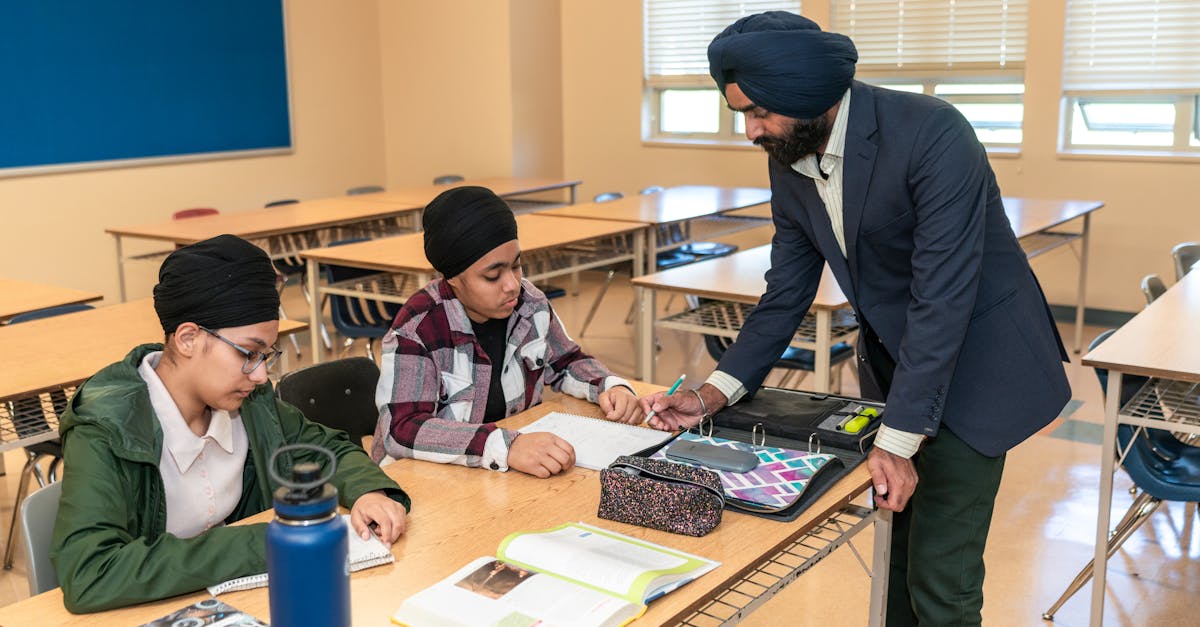

ChatGPT for Differentiated Lesson Plans: The Complete Guide for Overworked Teachers
Are you spending more hours adapting your curriculum for diverse learners than you are actually teaching them? Recent instructional data reveals that the average educator spends over 12.0 hours per week outside of school contract hours designing, modifying, and tiering learning resources. Despite this massive investment of professional energy, nearly 70.0% of teachers report feeling unsatisfied with the depth of their classroom differentiation, often defaulting to simplified, watered-down tasks due to severe time constraints. This struggle is the direct consequence of the legacy differentiation model: an unsustainable, manual process that forces teachers to act as high-volume content mills rather than strategic learning architects. The integration of ChatGPT for differentiated lesson plans offers a systematic path out of this administrative exhaustion, allowing you to scale master-level personalization without increasing your weekly preparation burden.
By the end of this guide, you will possess a comprehensive understanding of the D.E.S.I.G.N. Framework: a proprietary system designed to leverage generative models for precision-engineered, tiered instruction. We will examine the hidden cognitive and systemic costs of manual classroom adjustments, unpack a step-by-step model for structuring high-fidelity lesson prompts, and analyze real-world case study metrics from departments that have successfully reclaimed their planning time. Whether you are managing multiple Individualized Education Programs, accommodating varied English language proficiency levels, or looking to stretch your highest-achieving students, these strategies will restore your professional agency. The goal is to move past the era of random chatbot automation and enter the era of precision pedagogical design, ensuring that every student is met at their exact zone of proximal development.
The Hidden Cost of the Manual Differentiation Tax
The status quo of manual classroom differentiation operates as a silent tax on teacher energy and student potential. In a typical modern classroom of thirty students, an educator is routinely tasked with addressing three to five distinct reading levels, multiple sensory processing profiles, and varying levels of background knowledge. When teachers attempt to meet these diverse needs using traditional, manual methods, they fall into the Differentiation Paradox: the belief that creating separate, hand-crafted worksheets for every subgroup is the only path to equity. In reality, this approach leads to severe cognitive fragmentation for the teacher and produces inconsistent, surface-level resources for the student.
When you attempt to write three different versions of a reading passage, customize math problem sets, and design unique visual organizers by hand, you quickly encounter the limits of human bandwidth. Because time is finite, manual differentiation often results in binary modifications: either making the work shorter and easier for struggling students, or simply adding more tasks for advanced learners. This is a critical pedagogical error. Lowering the cognitive ceiling for struggling students prevents them from building the complex mental schemas required for independent problem-solving, while piling on busywork disengages high-achieving students. This dynamic is a primary driver of systemic teacher burnout and limits student growth. But there is a better way: a systematic model that treats artificial intelligence as a reasoning partner rather than a simple content generator.
By shifting your practice to utilize ChatGPT for differentiated lesson plans, you change the economics of instructional preparation. Instead of wasting hours on the mechanical labor of drafting alternative materials, you use the machine to handle the initial content refraction, allowing you to focus your limited energy on high-value clinical adjustments. When integrating these strategies, it is essential to establish a baseline of semantic accuracy. To understand how to anchor these digital interactions in technical language, explore our complete guide on the semantic precision protocol. This ensures that the technology amplifies your expertise rather than diluting the rigor of your subject matter.
The D.E.S.I.G.N. Framework: Precision Differentiation with ChatGPT
To move past superficial prompts and achieve consistent, high-fidelity instructional materials, you need a structured workflow. The D.E.S.I.G.N. Framework is a proprietary, six-step protocol developed to ensure that every lesson generated by ChatGPT maintains academic integrity while providing tailored access points for every learner profile in your classroom.
| Framework Phase | Core Objective | ChatGPT Operator Action | Cognitive ROI |
|---|---|---|---|
| D – Define the Anchor | Establish the rigorous core learning milestone | Input specific state standards and primary texts | Protects lesson from standard-drift and cognitive watering-down |
| E – Establish Cognitive Paths | Map access tiers for diverse learning needs | Define the support structures for struggling and advanced groups | Aligns lesson pathways with actual class demographic data |
| S – Structured Prompting | Construct constrained, rule-based instructions | Use the Role-Task-Constraint-Context (RTCC) template | Eliminates generic outputs and ensures predictable accuracy |
| I – Integrate Verification | Audit machine outputs for educational accuracy | Compare text against textbooks and curriculum standards | Identifies subtle logical gaps and mechanical hallucinations |
| G – Generate Refracted Assets | Produce custom physical scaffolds and texts | Execute the prompt loops for reading levels and visuals | Saves up to 10.0 hours weekly in manual resource writing |
| N – Navigate the Process Audit | Transition from digital support to unassisted mastery | Enforce analog exit tickets and in-person verbal reviews | Ensures learning moves from the screen to student long-term memory |
Step 1: Define the Anchor Milestone
Before opening any generative digital workspace, you must establish the rigorous core learning standard. The technology is never the lesson itself: it is merely the engine used to access or test the lesson. You must specify the precise conceptual milestone that every student: regardless of their differentiation group: must understand by the end of the instructional block. By defining the anchor first in clear, curriculum-aligned terms, you construct a protective boundary that prevents ChatGPT from watering down the essential academic rigor when generating alternative pathways.
For example, if your standard requires students to analyze how the structural layout of a text supports a central argument, the anchor milestone is not simply “reading the passage.” It is the ability to map the connection between physical text evidence and author intent. This anchor remains identical for every student in the room, maintaining high standards for all.
Step 2: Establish Cognitive Paths
Once your anchor is set, you map out the specific access tiers required for your classroom demographic. Rather than attempting to personalize for thirty individual students, consolidate your planning into three distinct, structured cognitive paths:
- Tier 1 (Access Scaffolding): Designed for students reading below grade level, English Language Learners, or those with processing challenges. This pathway simplifies vocabulary, chunking long passages and embedding supportive visual placeholders or definitions, without lowering the conceptual demands of the standard.
- Tier 2 (Core Target): Designed for the majority of your cohort. It targets the grade-level standard directly, using standard academic language and scaffolded analysis questions.
- Tier 3 (Extension Rigor): Designed for your high-performing and gifted students. This pathway introduces structural complexities, complex analogies, or competing primary source perspectives, requiring deeper synthesis and critical evaluation.
Step 3: Structured Prompting (The RTCC Method)
To ensure that ChatGPT produces highly accurate, curriculum-aligned materials, you must write prompts using a structured format. The Role-Task-Constraint-Context (RTCC) prompt structure prevents the machine from generating generic, unhelpful lesson plans. By defining exactly what role the machine must play, what specific task it must perform, what strict constraints it must follow, and what context it must operate within, you obtain materials that are immediately usable in your classroom.
Copy and customize this master prompt template to execute the RTCC method:
Role: Act as an expert pedagogical designer with 15 years of experience specializing in differentiated curriculum architecture and Universal Design for Learning (UDL).
Context: I am teaching a diverse classroom of [Insert Grade Level] students. The core learning standard we are targeting is: [Insert State/National Standard]. The central concept that all students must master is: [Insert Anchor Milestone].
Task: Generate three distinct reading passages and corresponding analysis worksheets based on the primary concept of [Insert Topic]. The passages must be tiered into three specific cognitive pathways: Tier 1 (simplified vocabulary, clear structural headings, embedded vocabulary definitions), Tier 2 (standard grade-level text, clear academic prompts), and Tier 3 (advanced vocabulary, complex structural layout, contrasting perspective analysis question).
Constraints: Do not change the underlying central scientific or historical truth across the tiers. All three versions must analyze the exact same core concept of [Insert Core Concept] so we can conduct a unified class debate. Keep Tier 1 at a [Insert Low Lexile, e.g., 600L] level, Tier 2 at a [Insert Mid Lexile, e.g., 900L] level, and Tier 3 at a [Insert High Lexile, e.g., 1200L] level. Do not use generic placeholders or write incomplete sections.
Want the complete system for automated differentiation? Get all 50 classroom-ready prompt templates, UDL frameworks, and time-saving grading guides in the AI For Education book on Amazon → Get the book on Amazon
Step 4: Integrate the Verification Loop
No machine-generated resource should ever be handed directly to a student without a thorough verification check. You must run a systematic verification loop. Read through the generated outputs to ensure that ChatGPT did not introduce “semantic drift”: the tendency of language models to gradually simplify the core academic terminology when asked to lower a reading level. If you are teaching a biology unit, terms like “mitochondria” or “cellular respiration” must remain in the Tier 1 text, even if the surrounding sentence structures are simplified. You must also check for logical flow and ensure that the questions match your rubric requirements.
By implementing these verification protocols, you protect your curriculum from algorithmic drift. This process of logical stewardship is explored in detail in our framework on mastering curricular provenance, which provides the step-by-step logic for checking machine-generated tasks and maintaining absolute control over your academic content.
Step 5: Generate Refracted Assets
With your prompts verified and adjusted, you can now execute the generation phase. ChatGPT can rapidly produce a suite of aligned assets for each of your three tiers. This includes tiered reading passages, matching vocabulary support sheets, customized homework tasks, and specific verbal prompts for you to use during small-group instruction. Instead of spent-out planning sessions where you draft these materials from a blank page, you act as the chief editor: refining the machine’s high-speed output to match the precise social and academic dynamics of your classroom.
Step 6: Navigate the Process Audit
The final, and most critical, step of the framework is the transition from digital scaffolding to independent human demonstration. This is where you prevent “cognitive offloading”: the risk of students relying on digital tools to do the thinking for them. While ChatGPT can assist in designing the materials and scaffolding the initial inquiry, the ultimate proof of learning must occur in a device-free, unassisted environment. Enforce analog checkpoints such as handwritten exit tickets, small-group Socratic discussions, or physical whiteboard demonstrations where students must explain their thinking manually. This guarantees that the skills have successfully transferred from the screen into the student’s own biological memory.
Proof in Practice: Reclaiming the Planning Hour at Oakwood Prep
To understand the transformative impact of utilizing ChatGPT for differentiated lesson plans, consider the case of Oakwood Preparatory School, an urban secondary academy facing high rates of teacher attrition and low engagement among its diverse student population. In late 2023, the school’s humanities and science department reported that teachers were spending an average of 14.2 hours per week outside of school contract time trying to modify their materials to meet a wide range of reading abilities. Despite this exhausting commitment, school data indicated that student mastery in key STEM and historical inquiry units remained low, with struggling students disengaging and advanced students showing minimal academic growth.
The department implemented a school-wide training program centered on the D.E.S.I.G.N. Framework. Teachers stopped trying to manually rewrite readings and worksheets. Instead, they collaborated to build a private repository of structured, standard-aligned prompt templates for ChatGPT. They utilized the model to refract their primary curriculum texts into three distinct reading tiers, using the time saved on manual writing to design targeted, small-group intervention workshops during the school day. They also restructured their grading policies to focus on the student’s process of inquiry, requiring a physical, device-free verbal defense of every major essay and lab report to ensure the learning was genuine.
The quantitative outcomes collected at the end of the 2024 academic year were unprecedented:
- Teacher Preparation Time: Decreased from an average of 14.2 hours per week to just 4.8 hours per week, representing an average time savings of 9.4 hours per teacher every single week.
- Student Engagement: Classroom observations showed a 35.0% reduction in off-task behavior during differentiated independent work time, as students in the access tier were no longer frustrated by overwhelming text, and students in the extension tier were no longer bored.
- Academic Growth: Scores on standardized, proctored state examinations in both science and reading increased by 18.2% across the entire student population, with the lowest-performing quartile showing the steepest growth trajectory.
This study proves that when you systematically integrate technology into your curriculum design, you do not dilute the quality of your education. Instead, you elevate it. By automating the mechanical tasks of writing alternative texts, the instructors at Oakwood reclaimed their professional energy and reinvested it into the high-touch, human mentoring that defines master-level teaching. This could be your classroom.
A Quick Self-Assessment Checklist for Overworked Teachers
Before designing your next lesson plan, run through this quick self-assessment to identify where manual friction is slowing down your workflow and how to inject precision automation:
- Am I spending more than three hours per week manually writing or editing worksheets for different student groups?
- Do my differentiated materials have different learning goals, or are they all working toward the same rigorous standard?
- Have I established a systematic, rule-based prompt structure for my digital interactions, or am I just typing casual questions into ChatGPT?
- Am I verifying the factual accuracy and technical vocabulary of every machine-generated resource before handing it to a student?
- Does my assessment strategy include a device-free, analog exit point to guarantee that student learning is genuine and independent?
Frequently Asked Questions
How do I maintain academic integrity when using ChatGPT to help differentiate assignments?
Academic integrity is preserved when you shift your grading focus from the final product to the process of creation. If you only grade a final essay or a completed worksheet, you are vulnerable to students outsourcing that work to a generative model. However, when you integrate the D.E.S.I.G.N. Framework, the final artifact is only one component of the grade. Require students to submit their process logs, show their drafts with visible manual annotations, and participate in brief, in-person verbal checks. When the grade is based on the journey of inquiry rather than the destination of a document, the incentive to use technology as a shortcut evaporates.
Can ChatGPT effectively differentiate complex technical subjects like high school physics or advanced mathematics?
Yes. In fact, technical subjects are where generative models show the highest return on investment when guided by precise prompt constraints. Instead of asking ChatGPT to solve a math problem, command it to act as a Socratic simulator that designs three different instructional entry points for a single mathematical concept. For example, have it explain a formula through a purely visual diagram description (Tier 1), a standard procedural calculation (Tier 2), and a real-world multi-variable engineering simulation (Tier 3). This multi-modal approach ensures that students develop a conceptual understanding of the mathematics rather than just memorizing a list of procedural steps.
How do I handle the risk of ChatGPT simplifying or “watering down” the standard for struggling readers?
This is a common error known as “semantic flattening.” To prevent this, your prompts must include strict vocabulary constraints. In the “Constraints” section of your RTCC prompt, specify that the machine must retain all key domain-specific academic terms. For example, if the science standard requires students to analyze “photosynthesis,” instruct ChatGPT: “Do not remove or simplify the term photosynthesis. Keep this term in the Tier 1 text, but surround it with simpler sentence structures, clear contextual clues, and a parenthetical phonetic pronunciation guide.” This maintains high standards while making the vocabulary accessible.
Is this framework suitable for primary school classrooms where students do not have 1:1 devices?
Absolutely. The D.E.S.I.G.N. Framework is a design workflow for the educator: it does not require students to have screens. In fact, some of the most effective implementations of this model occur in analog primary environments. The teacher uses ChatGPT behind the scenes to generate physical materials: such as printout reading cards, customized small-group discussion prompts, or tiered hands-on activities. The classroom remains completely human-centered and tactile, while the teacher’s preparation workflow is fully optimized by the speed of generative technology.
Conclusion: Reclaiming Your Professional Presence
The rise of artificial intelligence in education is not a signal that the role of the teacher is disappearing: it is a mandate for your evolution. By moving away from the manual exhaustion of traditional resource design and adopting the systematic logic of the D.E.S.I.G.N. Framework, you reclaim the professional hour. You transition from a high-volume clerical task manager into a sovereign instructional designer, using technology to handle the heavy lifting of content adaptation while preserving your creative energy for the work that truly matters: the direct mentorship, emotional support, and ethical guidance of your students.
As you return to your practice this week, remember these three key takeaways:
- Focus on the Anchor: Never compromise on the core standard. Differentiate the pathway to the standard, not the learning standard itself.
- Master the Constraint: Write structured, rule-based prompts using the RTCC method to eliminate generic, low-quality ChatGPT outputs.
- Audit the Process: Enforce analog exit points to ensure that student understanding is deep, independent, and verified.
The transition to a highly efficient, differentiated classroom is a journey of professional renewal. If you are ready to stop spending your weekends writing alternative worksheets and start architecting a legacy of educational excellence, the complete system of prompt templates, case studies, and UDL workflows is waiting for you. Get the AI Teacher Toolkit on Amazon today and join the movement of high-performance educators. Together, we can build a future where technology is used to amplify the highest potentials of the human mind, creating a sustainable practice for teachers and a path to mastery for every student in the room.
Ready to transform your instructional workflow? Access the full system of differentiated lesson templates, standard-aligned prompts, and time-saving grading frameworks designed for the modern teacher. Get the AI Teacher Toolkit on Amazon today and reclaim your prep time.