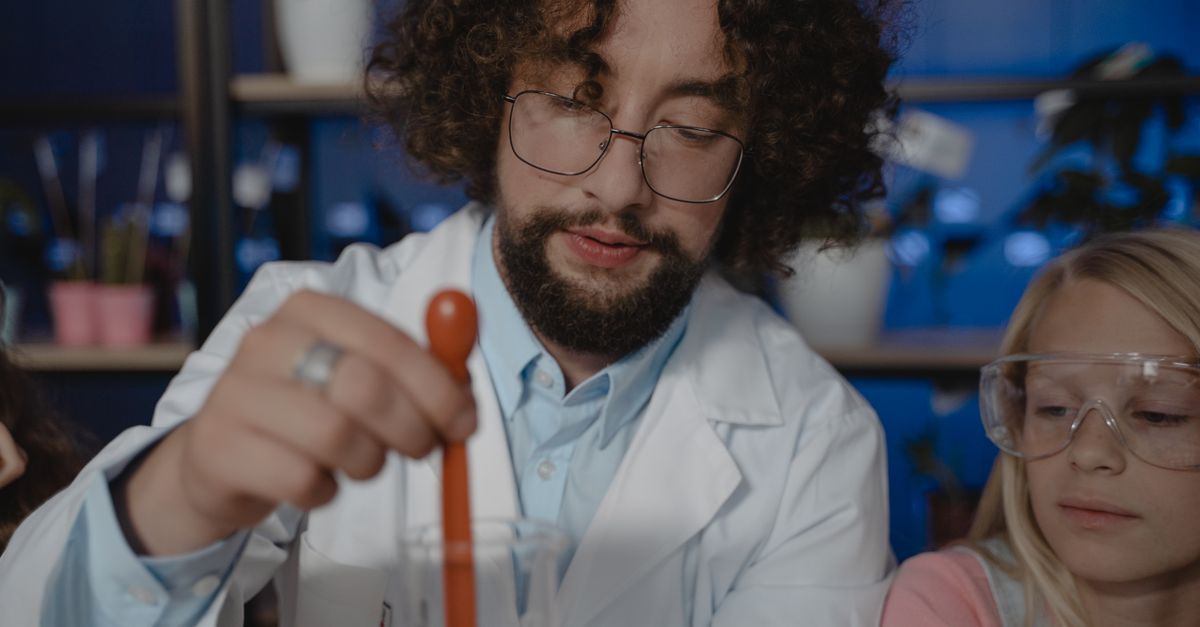
ChatGPT Prompts for Science Teachers: The Ultimate Guide to Saving Time in the Lab
Are we currently valuing science educators for their ability to spark critical inquiry, or are we treating them as low-cost laboratory logistics managers? Global educational workload audits reveal that the average high school science teacher spends up to eleven hours each week outside of contract hours on lab preparation, chemical inventory management, and safety compliance drafting. While textbook publishers provide static lab manuals, these resources rarely align with the physical constraints of individual classrooms, the varied reading proficiencies of students, or the modern safety standards required by local school boards. The resulting administrative friction leads to a silent crisis: teachers spending their nights formatting safety data sheets and adjusting lab steps rather than designing high-impact learning experiences.
The solution lies in a systematic approach to instructional automation. By utilizing targeted ChatGPT Prompts for Science Teachers, educators can transform their preparation period from a manual curation struggle into a high-efficiency engineering pipeline. This comprehensive guide provides a definitive framework for using generative intelligence to automate lab safety protocols, scale inquiry-based experiments, and build responsive scaffolds for diverse student populations. By treating your laboratory design as a systems engineering challenge rather than a manual labor task, you can reclaim your weekly preparation periods while simultaneously elevating the academic rigor and safety of your science program.
3 Myths Holding You Back on Science Lab Automation
Before we can build a high-fidelity automation system for your laboratory, we must dismantle the persistent misconceptions that keep science educators from leveraging generative artificial intelligence. These myths often stem from a fundamental misunderstanding of how natural language models process physical constraints and safety parameters.
Myth 1: AI Cannot Understand the Physical Layout and Safety Constraints of a Real Science Lab
The Reality: Many science teachers believe that because ChatGPT does not have physical presence, it cannot design a lab that is safe or practical for their specific classroom layout. However, generative models excel at processing complex multi-variable constraints when those constraints are explicitly defined in the prompt. By feeding your exact classroom parameters: namely, the number of functional sinks, the presence of fume hoods, the storage location of specific chemical compounds, and student-to-bench ratios: the system can design customized experimental procedures that prioritize physical safety and minimize traffic bottlenecks in the room. AI does not need to see your classroom: it simply needs the parameters of your physical environment to act as a highly precise spatial layout analyzer.
Myth 2: ChatGPT Prompts Are Only Good for Writing Theoretical Essays, Not Practical, Hands-On Experiments
The Reality: There is a common belief that AI-generated lesson materials are inherently abstract and detached from the physical reality of wet labs. In practice, the quality of a generated lab procedure is directly determined by the pedagogical constraints embedded within the prompt. If you ask for a simple lab on density, you will receive a generic, uninspired worksheet. However, if you instruct the system to draft a procedural protocol using only household items, specific mass-balance equipment, and microscale chemical techniques, the output is highly practical and immediately actionable. The technology acts as a compiler for your pedagogical intent, translating theoretical science standards into structured, step-by-step physical actions.
Myth 3: Using Generative AI to Design Labs Reduces the Intellectual Rigor of Inquiry-Based Science
The Reality: Opponents of technology integration worry that automating lab generation leads to paint-by-numbers cookie-cutter activities that bypass critical thinking. The truth is that manual resource curation is the primary obstacle to true inquiry-based learning. Because teachers lack the time to design thirty different inquiry pathways, they default to safe, structured, verification-style labs where students simply follow a recipe to find a pre-determined answer. By utilizing the speed of generative systems, educators can easily create open-ended inquiry scaffolds, construct synthetic data sets for error-analysis training, and build responsive prompt guides that lead students to discover scientific laws on their own. Automation does not eliminate rigor: it provides the cognitive surplus required to implement it.
The Three-Tiered Prompting Framework for Lab Instruction
To move past random prompt generation and achieve a systematic reduction in your planning workload, you must adopt a tiered model of implementation. This three-level framework progresses from basic administrative offloading to advanced metacognitive scaffolding, ensuring that your digital systems are always aligned with your pedagogical goals.
Level 1: Foundational Lab Preparation and Safety Engineering (Beginner)
At the beginner level, the goal is to identify high-volume, low-variability tasks that consume valuable working memory but offer minimal instructional yield. This includes drafting safety sheets, creating equipment checklists, formatting step-by-step lab guides, and translating procedures into simplified reading levels. The focus here is on reclaiming the physical time spent setting up the lab space. By using targeted prompts, science teachers can ensure that they are never starting from a blank page when preparing for a new experimental unit. This level of offloading is essential for establishing the baseline efficiency described in our ultimate guide to reclaiming your prep time, allowing you to establish a secure foundation for advanced instructional design.
The Beginner Prompt: The Material-Constrained Lab Generator
Act as a master secondary chemistry teacher and laboratory safety coordinator. I need to design a 45-minute hands-on lab experiment for a class of 28 students working in pairs. The learning objective is for students to investigate the conservation of mass during a precipitation reaction. However, I have severe resource and physical constraints.
Physical Constraints: No fume hoods are available. Sinks are only located at the perimeter of the room. I have a maximum of 14 electronic balances accurate to 0.1 grams.
Allowed Materials: Only household or low-hazard chemicals: baking soda (sodium bicarbonate), white vinegar (dilute acetic acid), calcium chloride (damp rid), water, plastic zip-lock bags, and graduated cylinders.
Required Outputs:
1. A clear, step-by-step student procedure that minimizes chemical spills and traffic to the sinks.
2. A comprehensive 3-point teacher preparation checklist detailing what to prepare 24 hours in advance.
3. A student-facing safety contract highlighting the exact hazards of calcium chloride skin contact and gas pressure buildup inside closed bags.Evaluate the procedure to ensure that no pressure buildup can cause physical failure of the containers. Write in a clear, concise, and professional tone suitable for a high school science department.
The Logic: This prompt works because it establishes the role, defines the specific learning objective, and imposes strict physical and chemical constraints. By explicitly stating the lack of fume hoods and limiting materials to low-hazard compounds, the prompt prevents the AI from generating unsafe procedures that require hazardous chemicals or specialized equipment.
Level 2: Adaptive Inquiry and Real-Time Variable Scaffolding (Intermediate)
At the intermediate level, we transition from structured verification labs to guided inquiry-based learning. In an inquiry-based science classroom, students do not follow a set procedure: they design their own investigations. However, this creates a major logistical challenge: how does a single teacher scaffold thirty different student-designed experiments simultaneously? By using generative systems, educators can create adaptive planning matrices that predict student design failures, provide targeted hints without giving away the answers, and level the difficulty of the inquiry task based on student readiness.
The Intermediate Prompt: The Guided Inquiry Scaffold Matrix
Act as an expert instructional architect specializing in inquiry-based science pedagogy. I am planning a lab where students must design their own experiment to test the effect of temperature on the rate of an enzyme-catalyzed reaction: specifically, the breakdown of hydrogen peroxide by yeast catalase.
Generate a 3-tiered differentiation guide that I can use to scaffold student planning in real time based on their demonstrated readiness:
Tier 1: High Support (For students struggling to identify variables): Provide a structured planning template with sentence frames, a defined list of independent/dependent variables to choose from, and a guided hypothesis-writing prompt.
Tier 2: Moderate Support (For students who understand variables but struggle with procedural steps): Provide a list of critical questions that lead students to consider constant factors, such as yeast concentration and reaction volume, without telling them how to measure them.
Tier 3: Low Support (For advanced students ready for extension): Provide a challenge prompt that forces them to account for the mathematical rate calculation and the physical limitations of manual gas volume collection.
Additionally, generate a Misconception Alert Sheet for the teacher, listing the top three logical errors students make when designing rate experiments and the exact Socratic questions to ask when they exhibit these errors. Format this clearly using bold headers and bullet points.
The Logic: This prompt utilizes the system as an instructional designer to construct an educational scaffold. Instead of creating a single sheet, it builds a multi-tiered response path. The integration of Socratic questions ensures that the teacher remains the facilitator of learning, using the AI to scale their ability to ask guiding questions across the room.
Level 3: Algorithmic Error Analysis and Synthetic Data Generation (Advanced)
At the advanced level, we leverage the computational and logical capabilities of generative intelligence to teach higher-order data literacy. A major bottleneck in laboratory instruction is dealing with failed experiments: when the class data is noisy, corrupted, or completely erroneous due to equipment failure. Instead of abandoning the learning opportunity, advanced science teachers use generative systems to turn these failures into analytical goldmines. The system can instantly generate synthetic data sets that contain specific, realistic errors: such as calibration drifts, parallax errors, or systematic impurities: challenging students to find the logical anomaly in the numbers. This aligns with the systematic approach to academic standards outlined in our guide to standard alignment and curriculum mapping, which ensures that even data analysis tasks are directly anchored to national science performance benchmarks.
The Advanced Prompt: The Forensic Data Leak Detector
Act as a forensic research scientist and educational data analyst. I need a synthetic data set designed for a high school physics lab investigating Ohm's Law. The target relationship is V = I * R, where students measured the voltage drop across a fixed 220-ohm resistor at various currents.
Create an HTML data table containing 10 trials of current (in milliamperes) and measured voltage (in volts). The data must contain three distinct types of realistic anomalies:
1. A systematic zero-point calibration error where the voltmeter consistently reads 0.15 volts too high across all trials.
2. A random human transcription error in Trial 5 where a decimal point was misplaced.
3. An increased thermal resistance drift in the final three trials due to resistor heating, showing a slight non-linear deviation from Ohm's Law.Following the data table, provide a detailed Forensic Teacher Key explaining: the mathematical basis of each error, how students can identify them graphically by plotting a best-fit line, and three critical thinking questions that ask students to explain the physical mechanism behind the thermal resistance drift.
The Logic: This prompt moves beyond simple text generation into mathematical and conceptual modeling. It instructs the AI to purposefully corrupt data with realistic physical phenomena (thermal drift) and human errors (transcription and zero-point calibration). This provides a rich, multi-layered data literacy task that simulates real scientific research.
The Ultimate Lab Toolkit: Comparing Implementation Systems
To understand the strategic value of incorporating specialized prompts into your daily workflow, we must analyze the comparative outcomes of different laboratory preparation methods. Many schools currently operate in a state of high logistical friction, with teachers manually managing isolated planning documents. An integrated system resolves this by providing a unified architecture for laboratory management.
| Operational Metric | Manual Lab Curation | Fragmented AI Use | Systematic Prompt Toolkit |
|---|---|---|---|
| Preparation Latency | 4 to 6 hours per experiment | 1 to 2 hours (high manual editing) | Under 15 minutes of execution |
| Safety Integration | Inconsistent (copy-pasted sheets) | Generic (basic chemical lists) | High (explicit physical parameters) |
| Differentiation Capacity | Low (too time-consuming) | Moderate (basic text leveling) | Exceptional (multi-tiered scaffolds) |
| Data Literacy Integration | Static (textbook data tables) | Ad-hoc (simple number grids) | Precise (modeled error analysis) |
By comparing these systems, we can see that manual curation is a highly volatile strategy that leads directly to instructional burnout and narrow curricular offerings. Fragmented AI use: namely, treating ChatGPT as a search engine for worksheets: saves some time but fails to establish a consistent safety standard or a unified pedagogical voice. A systematic prompt toolkit represents the highest level of professional sovereignty. It allows the science teacher to operate as a high-fidelity systems architect, using technology to handle the heavy computational, formatting, and scaling load while retaining full creative control of the learning experience.
The Strategic Lab Redesign: A 3-Step Integration Plan
Moving from manual lab curation to a state of automated preparation requires an intentional strategy. This three-step integration plan allows you to implement systemic prompt engineering in your science program within forty eight hours, ensuring that every safety protocol, instructional sheet, and assessment tool is aligned with your physical space.
Step 1: Conduct a Spatial and Material Resource Audit
Before writing a single prompt, you must establish your laboratory’s material boundary. Spend fifteen minutes documenting your physical space: namely, the number of functional sinks, gas outlets, emergency safety stations, and fume hoods. Next, catalog your chemical storage and equipment inventory. This structured dataset forms the baseline constraint for your future prompt interactions, ensuring that the system never suggests an experiment containing materials or requiring equipment you do not possess.
Step 2: Build Your Prompt Exoskeleton
A major failure point when using generalist AI is model drift: the tendency of the system to produce generic, non-pedagogical, or unsafe procedures over long sessions. You can prevent this by building a customized prompt exoskeleton. This is a master system profile that you copy and paste into your session first, establishing your grade level, safety standards, regional curriculum requirements, and specific classroom constraints. This locks the model into your specific educational paradigm, eliminating eighty percent of your post-generation editing time.
Step 3: Establish a Student-Facing Safety Feedback Loop
The final step involves teaching students how to monitor their own safety compliance in the lab. Use your system to generate a series of micro-checks: such as visual infographics, immediate peer-to-peer safety audits, and post-lab cleanup checklists. Before students begin any experiment, they must document that they have reviewed the safety constraints and identified the locations of the eye wash and safety shower. This shifts the burden of safety monitoring from a top-down teacher enforcement model to a collaborative, student-driven culture of responsibility.
Case Study: The Chemistry Department Redesign at St. Jude's Academy
To see the real-world impact of systematic prompt engineering, consider the experience of the science department at St. Jude’s Academy, a regional secondary school with six science teachers serving over 800 students. The department was facing a critical workload bottleneck. The chemistry teachers were spending an average of twelve hours per week on laboratory preparation and manual reagent dilution calculations. Due to this high labor cost, hands-on lab sessions had decreased to once every three weeks, with the remainder of the instructional periods dominated by textbook-based lectures.
The department head decided to implement a systematic refactoring project over a single academic term. Rather than permitting teachers to use arbitrary digital applications, the team standardized their operations around a unified library of ChatGPT Prompts for Science Teachers. They began by building a shared digital database of their physical chemical inventory and classroom constraints. They then constructed custom prompt templates designed to automate lesson design, material preparation guides, and safety contracts.
The outcomes of this transition were immediate and measurable:
- Reclaimed Planning Time: Average weekly preparation latency dropped by 64.0% within the first four weeks. Teachers reduced their lab prep time from 12.0 hours to under 4 hours per week, completely eliminating the need for weekend planning.
- Instructional Frequency: Hands-on laboratory sessions increased by 150.0%, moving from a tri-weekly schedule to twice every single week. This dramatic shift was enabled by the rapid generation of microscale, low-prep experiments.
- Safety Compliance Mastery: Audits by the local school board safety officer showed zero compliance issues. Every lab procedure had a customized, high-fidelity safety contract containing specific emergency steps.
- Budget Optimization: By using the system to optimize reagent concentrations and design microscale procedures, the department reduced its chemical purchase costs by 35.0% over two semesters, reinvesting those funds into modern digital sensors.
This dramatic transformation demonstrates that adopting a systematic approach is not a professional luxury: it is the foundation of career longevity. By treating your laboratory as an engineered system, you protect your cognitive energy and ensure that your instructional legacy is secure.
“The transition to systematic prompting completely changed the culture of our department. We stopped being bottlenecked by the physical labor of reagent prep and started focusing on the actual science behind our students' questions. We became mentors again, not just lab clerks.”
– Marcus Vance, Science Department Chair, St. Jude’s Academy
Many science teachers make the mistake of letting generative AI choose the chemical reagents for an experiment without strict constraints. This can lead to the generation of procedures that produce hazardous byproducts, require highly specialized disposal protocols, or violate local school board safety policies. Always enforce strict material constraints in your primary prompts. Use the AI to optimize procedures for the safe, simple materials you already have in your inventory.
Frequently Asked Questions
How do I ensure ChatGPT prompts don't generate unsafe or unstable chemical reactions?
Safety is maintained through explicit negative constraints, also known as boundaries. Never ask a system to generate a lab from scratch without defining what it cannot do. A high-fidelity prompt should always include a blacklist of prohibited chemicals and specific physical limits: namely, no reactions that release toxic gases, no procedures requiring closed-system heating without pressure relief, and no open-flame heating of flammable organic solvents. You remain the primary safety authority. The system acts as a high-speed draftsman, but your professional judgment must verify the safety of every chemical concentration and physical step before students enter the laboratory.
Can ChatGPT prompts help me design science labs that align with NGSS standards?
Yes. The Next Generation Science Standards focus on Three-Dimensional Learning: namely, combining Science and Engineering Practices, Disciplinary Core Ideas, and Crosscutting Concepts. Generative systems are highly effective at integrating these dimensions because they have been trained on the complete NGSS framework documents. To achieve this, your prompt must explicitly request that the lab activity evaluate a specific performance expectation and require students to utilize a defined crosscutting concept, such as Scale, Proportion, and Quantity, during their analysis. This ensures that your lab is a tool for deep conceptual discovery, not just a physical activity.
How do I handle lab modifications for students with physical or learning differences?
The system is exceptionally powerful for Universal Design for Learning modifications. If you have a student with physical mobility challenges, visual impairments, or language processing needs, you can instruct the system to modify an existing lab procedure. For instance, you can prompt the system to generate large-print, highly contrasted visual instructions, convert procedural steps into simplified icon-based sequences, or design alternative roles for cooperative group work that ensure equal participation in data collection and analysis. This allows you to differentiate on a level of detail that would be impossible under manual workflows.
Does this system work for specialized courses like Advanced Placement Chemistry or Physics?
Absolutely. For high-stakes advanced courses, the system is used to generate complex laboratory scenarios that mimic the multi-part analytical questions found on AP exams. You can prompt the model to design a spectrophotometric analysis lab, format titration curves containing deliberate chemical anomalies, or generate raw thermodynamics data that requires students to calculate enthalpy changes using Hess's Law. The key is to specify the level of academic rigor and provide the exact mathematical parameters the students must master. The system will then tailor the complexity of the lab to match college-level standards.
Conclusion: Reclaiming Your Status as an Instructional Architect
The era of manual, reactive, and exhausting science laboratory preparation is coming to a close. The science educators who thrive in the coming years will be those who master the intersection of learning science and digital automation. By adopting a systematic approach to ChatGPT Prompts for Science Teachers, you commit to your own professional sustainability and to the academic success of your students. You move away from the draining cycle of manual resource curation and toward the sovereign mastery of your time.
As you begin your implementation journey, focus on these three essential takeaways:
- Identify the Friction: Pinpoint the two most repetitive, non-instructional preparation tasks in your week and commit to offloading them to your prompt toolkit first.
- Enforce Safety Constraints: Treat your physical and chemical boundaries as absolute. Never prompt the system without defining your classroom constraints and safety limits first.
- Reinvest the Surplus: Intentionally choose how to spend the weekly hours you reclaim, whether on deeper student mentorship, creative scientific research, or your own professional recovery.
Do not allow another preparation period to be consumed by the administrative friction of legacy planning models. Reclaim your time, elevate your instruction, and restore the genuine joy of scientific discovery in your classroom. The path to professional sovereignty is waiting for you.
Ready to build your complete, sustainable preparation system? Get the definitive guide to modern instructional engineering on Amazon today. Get the book on Amazon and start architecting your future-ready science classroom now.